
Ayn Rand’s books, The Fountainhead and Atlas Shrugged, have come across my path several times over the past couple of years as books that were very influential in people’s lives — people like Alan Greenspan and other business leaders that I admire. They have been on my list to read for a while, but I kept passing them up a when I saw how long they were! However, since I did want to read them in 2008, I figured I’d better get started.
The version of The Fountainhead that I read had an introduction by Rand herself, that she wrote 25 years after the first publication. I have to admit that after reading it, I was a bit put off — or perhaps fired-up! — over it. Some of the things she said were incredible to me (and not in such a good way), while others were quite interesting…
For example, at some points in the introduction, Rand is awfully high on herself and her work. And that becomes largely apparent in the book’s hero, Howard Roark. I have always thought that humility is a virtue, while she thinks that humility is a “sin” (though a sin against oneself, not God). One example from the intro on this is the last paragraph:
It does not matter that only a few in each generation will grasp and achieve the full reality of man’s proper stature — and that the rest will betray it. It is those few that move the world and give life its meaning — and it is those few that I have always sought to address. The rest are no concern of mine; it is not me or The Fountainhead that they will betray – it is their own souls.
And then some interesting quotes from the intro:
On novels as they should be:
Novels, in the proper sense of the word, are not written to vanish in a month or a year. That most of them do, today, that they are written and published as if they were magazines, to fade rapidly, is one of the sorriest aspects of today’s literature, and one of the clearest indictments of its dominant esthetic [sic] philosophy: concrete-bound, journalistic Naturalism which has now reached its dead end in the inarticulate sounds of panic.
On Romanticism
Longevity — predominately, though not exclusively — is the prerogative of a literary school which is virtually non-existent today: Romanticism.
… It deals, not with the random trivia of the day, but with the timeless, fundamental, universal problems and values of human existence. It does not record or photograph; it creates and projects. It is concerned — in the words of Aristotle — not with things as they are, but with things as they ought to be.
I made a note to myself to make sure I read the intro again when I finished the novel, and I am glad I did. While some statements still are a bit off-setting to me personally, overall my perspective on it had changed for the better. I had hoped I would have the discernment to separate my personal views from those of hers, and in the end, I thought she did a fantastic job of portraying her views, ideals, and philosophy in the story itself. And that is what is most important. Not that I don’t agree with her on many points.
The basic premise of the book (and to a lesser extent her philosophy objectivism) is that man’s ego is the fountain head of all human progress. There is so much more to it, and Rand does an excellent job of presenting her ideas through the novel, and typically through dialogue rather than (long/boring) prose. Rand also explains that her main reason in writing is to “present the ideal man.” To do so, she has to define and present the characteristics which make him possible and which his existence requires… But she also wants to make sure the story is worth reading… “Is the pleasure of contemplating these characters an end in iteslf?”
While I don’t agree with several of her tenets, I thought the book was excellent. In some ways I’d like to add it to my all time favorites, but I need to wait a few years and read it again to see if it really stands the test of time.
One such tenet that I don’t care for his her idea that altruism is not a virtue. (In fact, her main character that dedicates her life to altruism ends up a wreck! As a side note, most of her characters are very black and white, with no shades of gray. While that is useful to expose archetypes through the novel, it is not very realistic.) The characters that do portray altruism always end up unhappy — because it becomes an ego driver in itself — the more they can help and give — the bigger their ego (wants to become). But they realize that one’s ego should not be the goal in altruism, and that begins to destroy their view of altruism and of themselves. I think this would go with Paul’s view of salvation by faith alone, not by works, so that none can boast… If any virtue is used to build ego, it is a recipe for disaster.
Another tenet that is hard for me to accept is that man’s ego is an ultimate virtue. However, she uses the term to mean more than what we normally associate with it — namely that it is remaining true to one’s ideals against the influence of others. I can agree with that. However, I think it is taken to an extreme. While we should not pander to everyone out there if they don’t live up to our ideals, it is not a sin to keep others feelings in mind. I can see that it is a fine line to walk — if you try not to hurt others, you may have to sometimes sacrifice some of your ideals. But then again, there are times when your ideals may be more important than how others feel, if they are pulling you from the ideal.
All in all a very thought provoking and provocative book that I highly recommend.
I had a ton of dog-eared pages for quotes, and I’ll include a few of them here.
1) From the intro, a quote from Nietzsche that she had originally planned to include as a preface to the novel, but that she took out because she was afraid the interpretation of the quote would not be what she desired by most readers. She goes off on Nietzsche a little — sometimes praising him — but more often bashing him — in discussing why she pulled the quote.
It is not the works, but the belief which is here decisive and determines the order of rank — to employ once more an old religious formula with a new and deeper meaning — it is some fundamental certainty which a noble soul has about itself, something which is not to be sought, is not to be found, and perhaps, also, is not to be lost. The noble soul has a reverence for itself. — Friedrich Nietzsche.
2) Rand used architecture as her motif, as the base of her story, and I felt like it was the perfect choice for what she wanted to portray. No other occupation lends itself so well to the story and ideals she presents.
The Parthenon did not serve the same purpose as its wooden ancestor. An airline terminal does not serve the same purpose of the Parthenon. Every form has its own meaning. Every man creates his meaning and form and goal. Why is it so important — what others have done? Why does it become sacred by the mere fact of not being your own? Why is anyone and everyone right — so long as it’s not yourself?…
3) One of the characters, Ellsworth Toohey, who happens to be the “anti-hero,” uses critics and editorials to shape the public in a mind numbing way — by promoting the average, the mediocre, or even the downright awful, all while criticizing true genius. The character is afraid of the genius because he can not control it. But I wonder how true this is today… How many people like a book, or a movie, or an album, because critics have raved on it?
“It is the critic’s job to interpret the artist .. even to the artist himself.”
4) Miscellaneous… Also on a book of Ellsworth’s.
He demonstrated that there was no such thing as free will, since men’s creative impulses were determined, as all else, by the economic structure of the epoch in which the lived.
5) This one goes along with the theme of “man worship” in the sense of admiring good work as performed by an individual:
People meant very little to Mike, but their performance a great deal. He worshiped expertness of any kind. He loved his work passionately and had no tolerance for anything save for other single-track devotions.
6) A few more, in which an ideal person should have an occupation that is not dependent in anyway on others:
If I found a job, a project, an idea or a person I wanted — I’d have to depend on the whole world. Everything has strings leading to everything else. We’re all so tied together…
Your life doesn’t belong to you if you’re really aiming high. [This is spoken to one of the anti-hero’s, not to the hero! ]
7) A few miscellaneous ones:
When facing society, the man most concerned, the man who is to do the most and contribute the most, has the least to say.
Integrity is the ability to stand by an idea. That presupposes the ability to think. Thinking is something one doesn’t borrow or pawn.
A quest for self-respect is proof of its lack.
I had so many more dog-eared pages, but I think that is enough for now. The Fountainhead is a long book, but it is a good book. And even if you don’t agree with Rand’s views on many subjects, as I suspect many of you won’t, anything that challenges your own views is worth a read in my opinion. This book will definitely do that if you give it a chance.

 I finally did 100 straight push ups!
 Some of that was due to a crazy summer, but even if I had been able to follow the program exactly, I don’t think that 6 weeks would have been a enough.


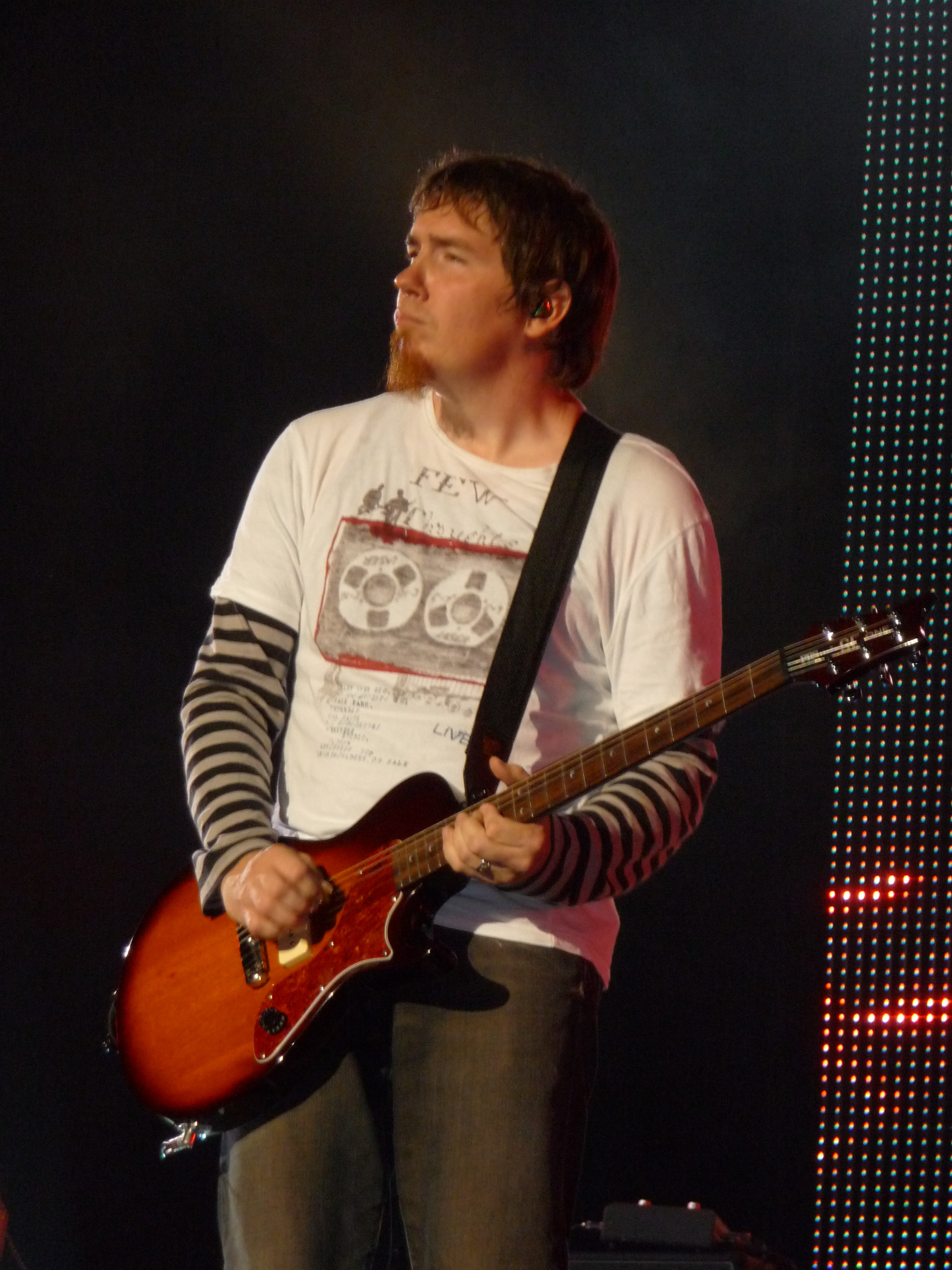
 I’m in Friends of the Foot, so after Switchfoot played, Kelly and thought we’d get to see them at the Meet and Greet, but it took longer than we expected, and when Third Day started playing, we left the line and went back to the show. Maybe next time we see Switchfoot in concert and they are the only headliner, we will get to meet them.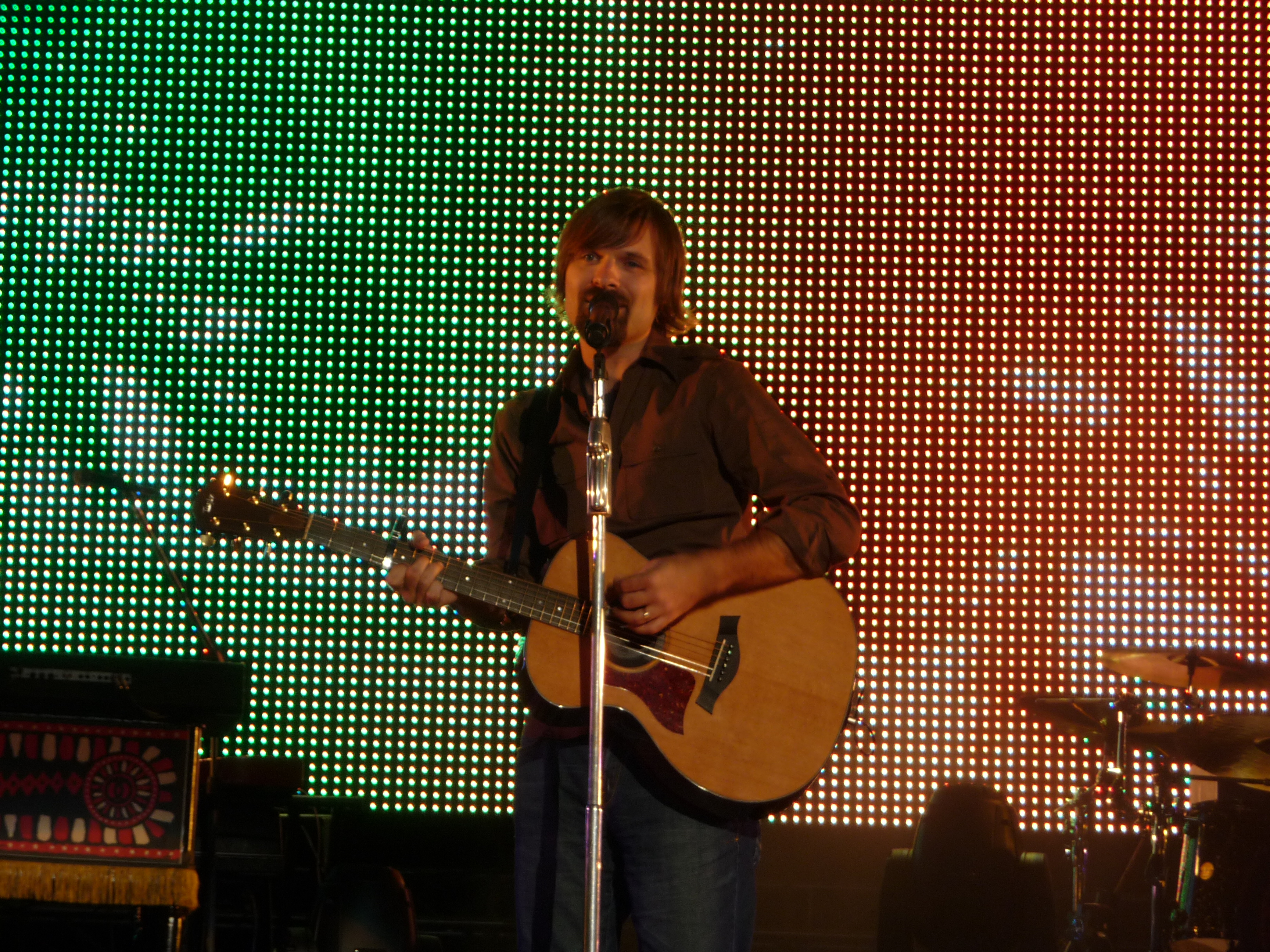




 2sparrows
