The Reason for God. Tim Keller.

reason

After a friend gave me The Prodigal God and I read it in a couple of nights,  I thought I should read more from Tim Keller — afterall, he is the pastor of a PCA church, as is Jim Belcher, author of Deep Church, and PCA just seems to keep popping up in much of my recent reading and in local conversations.

The Reason for God is at times much more apologetic than I typically care for, but at other times really spoke to me in ways I did not expect.  Two primary areas that it makes me want to investigate further are the Doctrine of Hell, especially in light of recent discussions surrounding hell as portrayed in Judgement House, and the Kingdom of God as described in Deep Church and other recent readings as a renewed and restored “creation,” here on Earth.

I think, because there is so much to this book, that I will just copy and paste the bulleted list of quotes from my EverNote notebook:
Quotes:

  • The people most passionate about social justice were moral relativists, while the morally upright didn’t seem to care about the oppression going on all over the world.
  • As a child, the plausibility of faith can rest on the authority of others, but when we reach adulthood there is a need for personal, firsthand experience as well.
  • … faith journeys are never simply intellectual exercises. [emphasis mine]
  • Each side should accept that both religious belief and skepticism are on the rise.  [ Two sides are religious and non-religious, believers and skeptics. ]
  • A faith without some doubts is like a body without any antibodies in it. People who blithely go through life too busy or indifferent to ask hard questions about why they believe as they do will find themselves defenseless against either the experience of tragedy or the probing questions from a smart skeptic. A Person’s faith can collapse almost overnight if she has failed over the years to listen patiently to her own doubts, which should only be discarded after long reflection.
  • Believers should acknowledge and wrestle with doubts — not only their own but their friends’ and neighbors’.  It is no longer sufficient to hold beliefs just because you have inherited them.  Only if you struggle long and hard with objections to your faith will you be able to provide grounds for your beliefs to skeptics, including yourself, that are plausible rather than ridiculous or offensive.
  • But even as believers should learn to look for reasons behind their faith, skeptics must learn to look for a type of faith hidden within their reasoning.
  • It would be inconsistent to require more justification for Christian belief than you do for your own.
  • The reality is that we all make truth claims of some sort and it is very hard to weigh them responsibly, but we have no alternative but to try to do so.
  • What is religion then?  It is a set of beliefs that explain what life is all about, who we are, and the most important things that human beings should spend their time doing.
  • Redeemer lacked the pompous and highly sentimental language they found emotionally manipulative in other churches..
  • [The] resistance to authority in moral matters is now a deep current in our culture.  [not just moral, but all matters!]
  • In our society many people have worked extremely hard to pursue careers that pay well rather than fit their talents and interests.  Such careers are straightjackets that in the long run stifle and dehumanize us.
  • Disciplines and constraints, then, liberate us only when they fit with the reality of our nature and capacities. A fish, because it absorbs oxygen from the water rather than the air, is only free if it is restricted and limited to water.
  • Freedom, then, is not the absence of limitations and constraints, but it is finding the right ones, those that fit our nature and liberate us.
  • When people have done injustice in the name of Christ they are not being true to the spirt of the one who himself died as a victim of injustice and who called for the forgiveness of his enemies.
  • Instead of trying to shape our desires to fit reality, we now seek to control and shape reality to fit our desires.
  • Our peer group and and primary relationships shape our beliefs much more than we want to admit.
  • Christians who accept the Bible’s authority agree that the primary goal of Biblical interpretation is to discover the Biblical author’s original meaning as he sought to be understood by his audience.   This has always meant interpreting a text according to its literary genre.
  • “Genesis 1 has the earmarks of poetry and is therefore a song about the wonder and meaning of God’s creation.  Genesis 2 is an account of how it happened.
  • We come to every individual evaluation with all sorts of experiences and background beliefs that strongly influence our thinking and the way our reason works.
  • CS Lewis:  I believe the son has risen, not only because I see it, but because by it I see everything else.
  • He looked at one argument for God after another, though many of them had a great deal of merit, he found that ultimately every one of them was rationally avoidable at some point…  He was assuming “strong rationalism” which itself has not airtight proof…  Then we went back to review the lines of reasoning and instead of calling the proofs looked at them as clues…
  • Science cannot prove the continued regularity of nature, it can only take it on faith.
  • … innate desires correspond to real objects that can satisfy them…
  • .. Dawkins admits that since we are the product of natural selection, we can’t completely trust our own senses.  After all, evolution is interested only in preserving adaptive behavior, not true belief…
  • Even when we believe with all our minds that life is meaningless, we can’t simply live that way.
  • pride is the enemy of hope
  • “Sin is:  in despair not wanting to be oneself before God… Faith is:  that the self in being itself is grounded transparently in God.”  — Kierkegaard
  • Our need for worth is so powerful that whatever we base our identity and value on we essentially deify.
  • Every person must find some way to justify their existence….  Every one is building their identity on something.
  • Sin is not simply doing bad things… It is putting good things in the pace of God.
  • “Your father has defeated you, as long as you hate him.  You will stay trapped in your anger unless you forgive him thoroughly from the heart and begin to love him.”
  • If you don’t allow your children to hinder your freedom in work and play at all, and if you only get to your children when it doesn’t inconvenience you, your children will grow up physically only.   In all sorts of other ways they will remain emotionally needy, troubled, and over dependent.
  • All life-changing love toward people with serious needs is a substitutional sacrifice.  If you become personally involved with them, in some way, their weaknesses flow toward you as our strengths flow toward them.
  • We should repent not only for what we have done wrong, but our motivations behind our good works…
  • It is not the strength of your faith but the object of your faith that saves you.


Born to Run. Christopher McDougall.

borntorun

I’d love to write more about this book, but I am about to head out on my 1st 24 hour adventure race in several years.  I am glad I finished it before race!  There are many things I could write about, but not right now.  Instead I will say that if you are an endurance athlete of any kind, love the great outdoors, then read this book.  McDougall did an excellent job in telling this story.

And I’ll leave you with my notes from the book, mostly just a bunch of quotes:

  • “Tarahumara virtues:  strength, patience, cooperation, dedication, persistence”
  • on a 95 year old Raramuri hiking 25 miles over a mountain:  “Know why he could do it?  Because no one ever told him he couldn’t.  No one ever told him he oughta be off dying somewhere in an old age home.”
  • “you are tougher than you think you are, and you can do more than you think you can.”
  • on women ultra runners:  “how come nearly all the woman finish Leadville and fewer than half the men do.”
  • “No wonder so many people hated running;  if you thought it was only a means to an end — an investment in becoming faster, skinnier, richer — then why stick with it if you weren’t getting enough quo for your quid?
  • on Leaville:  “pacing is so grueling and thankless, usually only family, fools, and damn good friends let themselves get talked into it.”
    • ( Hi Ben and Shane!  🙂 )
  • “Let us live so that when we come to die, even the undertaker will be sorry.” — Mark Twain
  • “I always start these events with very lofty goals, like I’m going to do something special.  And after a point of body deterioration, the goals get evaluated down to basically where I am now — where the best I can hope for is to avoid throwing up on my shoes.”
  • “You can’t hate the Beast and expect to beat it; the only way to truly conquer something, as every great philosopher and geneticist will tell you, is to love it.”
    • (The Beast is the “monster” that attacks every endurance athlete when they hit their lowest, and think they can’t go on.  It tries to convince them to stop.  I’ve been there, and I have survived.  🙂  )
  • On feet:  “They’re self correcting devices.  Covering your feet with cushioned shoes is like turning off your smoke alarms.”
    • Why I love my VFF’s!
  • “Your body needs to be shocked to become resilient..”
    • Why something like adding plyometrics to your work out is so good.
  • “You don’t stop running because you get old.  You get old because you stop running.”
  • “The reason we race isn’t so much to beat each other, but to be with each other.”
  • When Jenn Shelton fell and at first thought blood was pouring from her hand, and then realized it was chocolate goo, made me laugh out loud.  I was racing in FL with Ben once, and crashed over a gate that I  had not seen in the dark.  When I got up I thought I had severed an artery in my leg, there was so much “blood” coming down.  Took me a minute (while trying to figure out why I didn’t feel excruciating pain) to realized the goo I had in my shorts and exploded down my leg.  Shew, I wasn’t going to die out there in the wilderness!

There are two goddesses in your heart… The Goddess of Wisdom and the Goddess of Riches.  Everyone thinks they need to get wealth first, and wisdom will come.  So they concern themselves with chasing money.  But they have it backwards.  You give your heart to the Goddess of Wisom, give her all your love and attention, and the Goddess of Wealth will become jealous and follow you.”  (Ask for nothing from your running, in other words, and you’ll get more than you ever imagined.”

  • The oath:
    • “If I get hurt, lost or die, it’s my own damn fault!”
Books to read:
  • Dharma Bums — Kerouac

The Prodigal God. Tim Keller.

prod

A friend of mine gave this to me to borrow at small group a few nights ago, and it was a quick read.  The book is about the parable of the Prodigal Son, which I’ll include in its entirety at the bottom of this post:

Who would think that you could get an entire book out of that?  In fact, Keller himself writes:

On the surface of it, the narrative is not all that gripping.  I believe, however, that if the teaching of Jesus is likened to a lake, this famous Parable of the Prodigal Son would be one of the clearest spots where we can see all the way to the bottom.

Well, you can get an entire book out of it, and a very good book at that.  Most of the book focuses on the older brother rather than the younger brother, which is not quite the norm when I’ve heard this parable preached.  The older brother is full of self righteousness and this parable was directed at Pharisees…

A definition of  “prodigal” would be good:

prodigal:  recklessly spendthrift (not just wayward)

  • recklessly extravagant
  • having spend everything

Just a few quick thoughts:

  • Is God’s saving grace “prodigal” ???  (not in terms of spending, but in terms of saving with no reason)
  • Why people like Jesus but not the Church:  “Elder Brothers”  (self righteousness)  (pharisees)
  • One of the reasons the younger brother left in the first place (i.e. one of the reasons people leave the church) is because of older brothers

The Parable of the Lost Son

11Jesus continued: “There was a man who had two sons. 12The younger one said to his father, ‘Father, give me my share of the estate.’ So he divided his property between them.

13“Not long after that, the younger son got together all he had, set off for a distant country and there squandered his wealth in wild living. 14After he had spent everything, there was a severe famine in that whole country, and he began to be in need. 15So he went and hired himself out to a citizen of that country, who sent him to his fields to feed pigs. 16He longed to fill his stomach with the pods that the pigs were eating, but no one gave him anything.

17“When he came to his senses, he said, ‘How many of my father’s hired men have food to spare, and here I am starving to death! 18I will set out and go back to my father and say to him: Father, I have sinned against heaven and against you. 19I am no longer worthy to be called your son; make me like one of your hired men.’ 20So he got up and went to his father.
“But while he was still a long way off, his father saw him and was filled with compassion for him; he ran to his son, threw his arms around him and kissed him.

21“The son said to him, ‘Father, I have sinned against heaven and against you. I am no longer worthy to be called your son.[b]

22“But the father said to his servants, ‘Quick! Bring the best robe and put it on him. Put a ring on his finger and sandals on his feet. 23Bring the fattened calf and kill it. Let’s have a feast and celebrate. 24For this son of mine was dead and is alive again; he was lost and is found.’ So they began to celebrate.

25“Meanwhile, the older son was in the field. When he came near the house, he heard music and dancing. 26So he called one of the servants and asked him what was going on. 27‘Your brother has come,’ he replied, ‘and your father has killed the fattened calf because he has him back safe and sound.’

28“The older brother became angry and refused to go in. So his father went out and pleaded with him. 29But he answered his father, ‘Look! All these years I’ve been slaving for you and never disobeyed your orders. Yet you never gave me even a young goat so I could celebrate with my friends. 30But when this son of yours who has squandered your property with prostitutes comes home, you kill the fattened calf for him!’

31” ‘My son,’ the father said, ‘you are always with me, and everything I have is yours. 32But we had to celebrate and be glad, because this brother of yours was dead and is alive again; he was lost and is found.’ “

The Book of Lights. Chaim Potok.

bookoflights

I read almost everything Chaim Potok wrote, maybe 8 to 10 years ago.  Recently I saw The Chosen on someone’s coffee table, and it reminded me how much I enjoyed Potok.  So I picked up The Book of Lights again, thinking it was one of my favorites.  It was very good to re-read, and here are just a few quotes:

There is deep, deep within us the irrational…

Where do we read about evil as a separate manifestation, as a result of too abundant a growth of the quality of judgement separated from the quality of mercy?

The days grew short.  Sharp coldness invaded the nights.  He faced the winter with a determined sense of calm, whose source he could not understand but which he found distinctly pleasurable.

Strange how people drifted in and out of your life, and you never really got to know them.

A wise man knows for himself as much as is required, but the man of discernment apprehends the whole, knowing both his own point of view and that of others…

All the world, it seems, is a grayish sea of ambiguit, and we must learn to navigate in it or be drowned.

There was a line about “Gog and Magog,” which reminded me of the name of Doug Wilson’s blog, “Blog and Mablog.”  I had to look it up to see what that was about.

The Greatest Generation. Tom Brokaw.

greatgen

I have had a growing thought that the generation of our grandfathers, what Tom Brokaw calls “The Greatest Generation,” really had it together in so many ways.  They have so many admirable traits and characteristics, some of which I list below.  This book starts with an overview of the generation — how most were young children during the depression, fought in World War II, and then came home to very successful careers, lives, and marriages, how they built a tremendous society and economic powerhouse, etc.  It then has a series of short essays about particular people from that generation, some you have never heard of, and some famous.

Some words and phrases that describe the people of “The Greatest Generation:”

  • personal responsibility (one we truly lack today)
  • accountability
  • strong worth ethic
  • self sufficient/reliant
  • humility
  • loyalty
  • courage
  • honor
  • family values
  • faith
  • community
  • commitment to marriage (NOT “let’s see how this works out”)
  • sense of duty to country/patriotism
  • “life is precious”
  • delayed gratification rather than a need to “have everything now”
  • selfless
  • strong sense of gratitude (my favorite!)
  • pride in what they accomplished, but with quiet humility
  • “Those of us who lived have to represent those of us who did not.”

Their thoughts on today’s generation(s):

  • Today’s generation –>  We don’t appreciate things because we don’t have to work for them.
  • Baby boomers –> came of age when excess, not deprivation, was the rule
  • Too many people want others to take care of their kids

Of course not everything was good, and one regret that many had was that they spent too much time at work and not enough time with family.

A very good read in my opinion, and I hope that somehow our generation (and the one that is following) could pull together and be as strong as the Greatest Generation was, if we had to be.  I sometimes regret that I have never had to be truly tested, but maybe that is why I enjoy “extreme” sports like adventure racing, orienteering, mountaineering, etc., and why I enjoy digging into the classics — even those that are a struggle to read and understand.

Paideia of God, And Other Essays on Education. Douglas Wilson.

paideia

This is a book of 9 essays by Douglas Wilson, a man I have grown to respect more over time as I have read more of his works (several books and his blog).  He has strong insight and a sharp mind, and is of course worth reading if you are endeavoring on starting a Classical Christian School. Below I’ll say a thing or two about each essay and include some quotes that stood out for me here and there.

The Paidea of God

This will be a good essay for me to review before I need to get up and do any public speaking about what HRCA is all about.  It is really about the culture…  There was great point about our culture’s lack of personal responsibility and accountability, and our full flight away from hard work.

Whenever students share the same formal education, their cultural differences become mere subcultural differences.

Teaching Disadilities:  Why Johnny Doesn’t Learn Much Anymore

This one talks about the rampant rise of students with “disabilities” such as dyslexia, ADHD, ADD, etc. over the past few years.  I don’t know much about these, and Wilson’s stance seems pretty strong, and definitely against the mainstream.  But I do tend to agree that the use of Ritalin and other such drugs is way over prescribed.  He argues that discipline can solve the problem for many of those children.  He talks about how and whether schools should offer services to those with disabilities, which is something we at HRCA are faced with.

Finally, he had a good point about “parity of results.”  That is something a school should not strive for, because everyone is different.  For example, not everyone is great at math.  Those that are great should get A’s, those that struggle should not.  And parity of results is a recipe that is often followed at many modern schools.

A quote:

A lack of discipline will spread from the students to the staff, and it will not be long before the school is filled with teachers and students, each providing cover for one another’s laziness.

This essay also has a great section on the difference between discipline and punishment.  To briefly summarize, punishment is interested only in justice, whereas discipline is interested in both preparation and correction.  Positive discipline does not presume that anything has been done wrong — it teaches the proper work ethic and study habits.  Negative discipline IS a response to wrong doings.

… while correction may be absent for a self-motivated and well-behaved student, discipline is never absent.

A Brief Statement Against Vouchers

Not much to say on this one except that it argues that if a “private” school accepts vouchers (government money), it won’t be long until said school starts suffering government intervention.  (And I would have to agree!)  As a start up school struggling with our budget, in a community where many see the cost of private school as too high, it would be great to have a source of funds to get more kids into the school.  But not if the source is an institution that will begin to try to have more and more say and control over what we are doing.

Does Classical Mean Reformed

This essay has a (very) brief historical synopsis of “Reformed” and a little on what it actually means, but if you are looking for more, I would recommend RC Sproul’s “What is Reformed Theology?” What is most interesting is the following quote, which matches up quite well with at least two of the core group of Haw River Christian Academy (including me):

. . . many of those who are involved in starting up classical and Christian schools are on their own pilgrimage.  They do not have any settled doctrinal convictions but are unsettled by that fact.  They feel rootless and unequipped to teach their children.  They have begun the process regardless, and they have constantly come up against what may be described as a fundamental theological reason why their studies seem so fruitless.  They are trying to be faithful but cannot seem to get any traction.  I have seen numerous such individuals who have begun to investigate Reformed theology precisely because their previous theology (or, more likely, lack of theology) provided an inadequate foundation for the kind of eduction they wanted to provide for their children.

The Great Logic Fraud

At first I thought this essay was all over and off base, but it has grown on me.  When I reached the part about descriptive vs. prescriptive grammar, I had to chuckle.   See #7 here.  The main argument here is that if we abstract things too far, whether it is in quantum physics, grammar, logic, or just about anything, we can lose a touch of reality in what we are studying and easily reach false conclusions.  I tend to agree to an extent, but there is a time when such abstractions can help us to solve real world mysteries.  So I think it is best if you are just aware of the pitfalls of abstraction, but not be afraid to abstract.

A Brief for Greyfriars Hall

An interesting look at why the local church should participate in the education of its future leaders of that church, rather than expecting leaders to come in from seminary.

A quote he had from Charles de Gaulle:

The graveyards are full of indispensable men.

Why Evangelical Colleges Aren’t

A look at why Evangelical colleges are no longer evangelical…

Classical Learning and the Christian College

Another essay on what is going on in most colleges and how they have strayed, though this one seemed to wander here and there as it went…

Anything the world can do, we can do five years later.

It did have a great little section on why studying history and the classics is important — namely that the Bible can not be well understood if you don’t know anything about the historical context of when it was written.  And I personally would add that there has been a “great conversation” throughout the history of the west in literature, with great minds digging deep into faith, philosophy, etc.  I also think that classics from other cultures are important to read too!  🙂


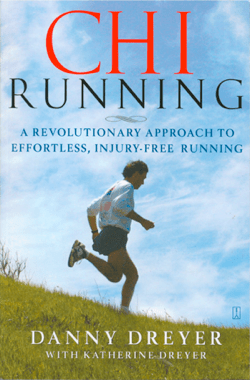
Chi Running. Danny Dreyer.

chirunning

As most of you know, I have a history of knee problems, though I do seem to be getting better and better.  I am runing faster than anytime in the past 4 years (but still about a minute per mile slower in a 5k than before my knee got really bad).  And I’ve heard good things about the style of running described in Chi Running, so I wanted to read the book.  There is a lot of common sense information here, and I really need to take the time to put it into practice, work on the exercises and the form, before I can say whether this form is going to “fix me.”  Overall my form is not that bad per se, but I have biomechanical deficiencies… Now which came first, I can not say — i.e. did my bio mechanics change to prevent the pain, or did the bio mechanics cause the pain?

Anyway, reading this makes me want to also get the DVD, but even more so sign up for one of the Chi Running workshops.  There are some as close as Raleigh, but since Danny lives in western NC, I may try to get into one he teaches himself in Asheville.

The book is full of philosphy from T’ai Chi that are applied to both running and life.  (Many of the philosphies are similar to Yoga…)  Anyway, here are some such tidbits of information:

It was weird to find a quote fomr Cecil DeMill regarding his film “The 10 Commandments,” but there it was:

It is impossible to break the law ourselves.  We can only break ourselves against the law.

(Here Dreyer was referring to “moving with nature,” not against it.  Or using gravity to propel your running (via a forward lean) rather than the power of your own muscles.)

Relaxation is the absence of unnecessary effort.

A tansition is a conscious pause.  It is a time to take stock of yourself and thing about the run before you are about to begin.  The space before a run is like the pause between breaths.  It’s the thoughtful momemnt that precedes movement, when you set up your intentions of what you’d like to do during your run.  It’s your opportunity to ponder what you’d like to focus on, whether it is pacing, focuses, weak areas of form,….

Our culture offers us little in terms of training us how to live and appreciate life from the inside out.  So much of our focus is on the external that little attention is put on considering what goes on internally…

In Cold Blood. Truman Capote.

cold

After watching the movie “Capote” back in December, I wanted to read at least a couple of Truman Capote’s books.  I decided on “In Cold Blood” to start, since that is really what the movie was about.  It is somewhat fascinating to compare the movie, which is really about Capote writing this book, and even more so about Capote himsel, at least at that point in his life, to the book, which is really about the murders that took place, and has nothing to do with Capote himself other than it is through his eyse that you see the story.  It is told almost as a documentary, with lots of interviews and quotes, along with research into this crime and others like it that had occured in the same era.   I love the movie — Hoffman did a great job portraying Capote — but the book is just so-so.  A good read for the story, but there isn’t anything beyond that.

The Curious Case of Benjamin Button. F. Scott Fitgerald.

I happened to catch  the trailer for the movie, and definitely want to see it at some point…  But before then, I decided to read it via Daily Lit.  It is quite short at just 11 installments of about 5 minutes each.  Fascinating story of a man born old that grows young.  This may be a case where the movie turns out better than the story, but only because the story is a short story and there seems to be room for so much more.  As evidenced by the trailer…