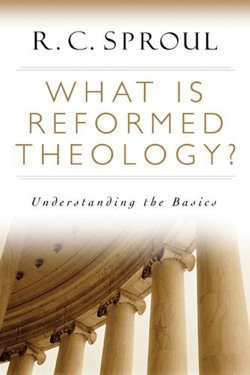
I have been digging deeper into various Christine doctrine recently, and have been really drawn to systematic theology as part of that. In fact, I have been spending more my Systematic Theology book by Wayne Grudem, and listening to a systematic theology class I downloaded off of iTunesU. For some reason I have been drawn to Reformed Theology, and I have heard great things about R.C. Sproul before, so this looked like a good book. Turns out it is a good book, but is lacking in a few areas.
First, what I have heard about Sproul is true — he is a great writer. He can really explain very complex issues in an easy to understand way, in a relatively short amount of space. Second, the book is great at explaining concepts using comparisons to other Theologies, such as Roman (Catholic), Arminianism, etc. This was especially helpful to me, as I am still learning about each of these and still need help separating them from one another.
But when I finished, I found it lacking in a few key areas (though I still would highly recommend it to anyone that is interested in exploring theology deeper and is not very familiar with the Reformed view).
One issue I found is that some key words and concepts are never explained. I would expect an “Understanding the Basics” book to spend a little more time defining theological terms that a person that is not a student of theology would not know. Sometimes terms were defined, but often they were not. Key concepts of Reformed Theology were explained at great lengths and explained very well. But I found some terms were not defined at all.
Also, while this book covers the key concepts of Reformed Theology very well, it hardly ever mentions key issues that the doctrines arise. For example, nowhere does he mention how, or why, the Reformed still need to follow the Great Commission in light of the Reformed’s understanding of God’s elect.
Now, I am certainly new to some of these concepts… The Baptist churches we have been a part of are typically light on the doctrines that tend to separate different denominations of Protestantism. But I will put forth the MAIN difference between Reformed and others here: In the Reformed view, the Holy Spirit instigates Faith in Jesus within the Believer, whereas other views tend to hold, for the most part, that the person himself makes the decision to have faith. And here instigates is probably not the proper word, as I think both Reformed and Evangelical would hold to that. With Reformed, it is the Spirit that believes — so God is really doing all the work in his elect to bring the person to salvation. The believer does not make the choice at all.
I certainly see where the Reformed view comes from in light of the Scriptures presented by Sproul in this book and in other resources I have been looking at, but I still need to dig deeper. In fact, this is a book I will read again in a year or two, after I have had time to read other sources and grow my understanding.
I’d love to hear from anyone in the comments if this main difference I am perceiving is accurate. (And I do know there are other differences, but it seems to me this is the key difference.)
Two quotes:
The ultimate form of idolatry is humanism, which regards man as the measure of all things.
The disappearance of theology from the life of the Church, and the orchestration of that disappearance by some of its leaders, is hard to miss today but, oddly enough, not easy to prove. It is hard to miss in the evangelical world — the vacuous worship that is so prevalent, for example, in the shift from God to the self as the central focus of faith, in the psychologized preaching that follows this shift, in the erosion of its conviction, in the strident pragmatism, in its inability to think incisively about the culture, in its reveling of the irrational. (Here Sproul is quoting from No Place for Truth by David F. Wells.)







 2sparrows