What we become depends on what we read after all of the professors have finished with us. The greatest university of all is a collection of books.
— Thomas Carlyle

What we become depends on what we read after all of the professors have finished with us. The greatest university of all is a collection of books.
— Thomas Carlyle
[Update] I have been getting a lot of hits on the “quote from into the wild” posts — the ones like this that are just a quote without my personal context of the book and movie… So I am going to put in links to my posts on:
The physical domain of the country had its counterpart in me. The trails I made led outward into the hills and swamps, but they led inward also. And from the study of things underfoot, and from reading and thinking, came a kind of exploration, myself and the land. In time the two become one in my mind. With the gather force of an essential thing realizing itself out of early ground, I face in myself a passionate and tenacious longing — to put away thought forever, and all the trouble it bring, all but the nearest desire, direct and searching. To take the trail and not look back. Whether on foot, on snowshoes or by sled, into the summer hilsls and their late freezing shadows — a high blaze, a runner track in the snow would show me where I had gone. Let the rest of mankind find me if it could.
— John Hains. The Stars, The Snow, The Fire: Twenty-five years in the Northern Wilderness.
[Update] I have been getting a lot of hits on the “quote from into the wild” posts — the ones like this that are just a quote without my personal context of the book and movie… So I am going to put in links to my posts on:
Now what is history? It is the centuries of systematic explorations of the riddle of death, with a view to overcoming death. That’s why people discover mathematical infinity and electromagnetic waves, that’s why the write symphonies.. Now, you can’t advance in this direction without a certain faith. You can’t make such discoveries without spiritual equipment. And the basic elements of this equipment are in the Gospels. What are they? To begin with, love of one’s neighbor, which is the supreme form of vital energy. Once it fills the hear of man it has to overflow and spend itself. And then two basic ideals of modern man — without them he is unthinkable — the idea of free personality and the idea of life as sacrifice.
Boris Pasternak, Doctor Zhvago.
(McCandless underlined love of one’s neighbor, free personality, and life as sacrifice — I’ve used red and bold here.)
[Update] I have been getting a lot of hits on the “quote from into the wild” posts — the ones like this that are just a quote without my personal context of the book and movie… So I am going to put in links to my posts on:
I cannot tell now exactly, it was so long ago, under what circumstances I first ascended, only that I shuddered as I went along (I have an indistinct remembrance of having been out overnight alone), — and then I steadily ascended along a rocky ridge half clad with stinted trees, where wild beasts haunted, till I lost myself quite in the upper air and clouds, seeming to pass an imaginary line which separates a hill, mere earth heaped up, from a mountain, into a superterraean grandeur and sublimity. What distinguishes that summitt above the earthly line, is that it is unhandselled, awful, grand. It can never become familiar; you are lost the moment you set foot there. You know the path, but wander, thrilled, over the bare pathless rock, as if it were solidified air and cloud. That rocky, misty summitt, secreted in the clouds, was far more thrillingly awful and sublime than the crate ofa volcano sprouting fire.
Thoreau. Journal.
(I get a similar feeling when I hike up mountains! What an amazing writer Thoreau is — he has a sublime way with words.)
[Update] I have been getting a lot of hits on the “quote from into the wild” posts — the ones like this that are just a quote without my personal context of the book and movie… So I am going to put in links to my posts on:
Rather than love, than money, than fame, give me truth. I sat at a table where were rich food and wine in abundance , and obsequious attendance, but sincerity and truth, were not; and I went away hungry from the inhospitable board. The hospitality was as cold as the ices.
Thoreau — Walden.
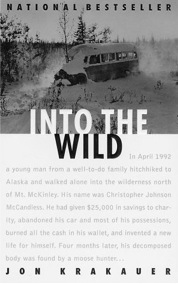
I read this years ago, apparently before I started keeping my “reading notebook” online in 2000, but I had to read it again after watching the movie recently. And I’ve been listening to the soundtrack more, which I started after seeing the movie. I didn’t listen to it that much when I first bought it, but it is apparent now that Eddie Vedder did a masterful job with the music and lyrics. He’s always been one of my favorite lyricists, but I did not have a real appreciation for this album until seeing the movie and now reading the book again.
The movie did a pretty good job keeping to the book’s story line, which it should since it is based on a true story. Of course, the book has more depth than the movie, but beyond that, it also has a couple chapters devoted to Krakauer’s own harrowing experience in the wild, as he attempted to climb the ice covered Devil’s Thumb — in winter — in which Mother Nature showed him who is boss. (And I’ve been there too!, though maybe not quite as bad.) But that added depth and reflection by Krakauer, and the relevance to McCandless’s own tale, which is left out of the movie, is well worth it.
The book also made me want to read Jack London, Tolstoy (which I have already purchased Family Happiness and is my next book in queue). I tried to read War and Peace a few years ago, and just never got in to it. I had to put it down after a couple hundred pages. McCandless speaks very highly of it … “powerful and highly symbolic” and “has things that escape most people” as he puts it. And it so happens that I sat next to a guy on a plane that was reading Anna Karina, and we talked about War and Peace, and he also said I need to pick it up again.
There are several great quotes Krakauer included, some of which made it into the movie. For this blog entry, I will include quotes from Krakauer and McCandless, but longer quotes from other authors I will put in their own blog entries.
…[don’t] fail to discover all the wonderful things that God has placed around us to discover. Don’t settle down and sit in one place. Move around, be nomadic, make each day a new horizon.” — McCandless
Children can be harsh judges when it comes to their parents, disinclined to grant clemency….” — Krakauer
I used to get the trance like state of what he described below when racing sometimes, usually when paddling on the 2nd night of a 3-day race, and you become separated from your body. Krakauer was describing a long ice climb, though…
A trance-like state settles over your efforts, the climb becomes a clear-eyed dream. Hours slide by like minutes. The accumulated clutter of day-to-day existence — the lapses of conscience, the unpaid bills, the bungled opportunities, the dust under the couch, the inescapable prison of your genes [ !! interesting how he through this in !!] — all of it is temporarily forgotten, crowded from your thoughts by an overpowering clarity of purpose and by the seriousness of the task at hand.
It is easy, when you are young, to believe that what you desire is no less than what you deserve, to assume that if you want something badly enough, it is your God-given right to have it. — Krakauer
But I came to appreciate that mountains [ or whatever you are ‘pursuing’ ] make poor receptacles for dreams.
It is interesting how this theme, or variations on it, seems to keep coming up!
Circumstance has no value. It is how one relates to a situation that has value. All true meaning resides in the personal relationship to a phenomenon, what it means to you. – McCandless
Happiness is only real when shared… — McCandless.

I read this after Tom Sawyer… This is the 1st book in a while that I didn’t dog-ear any pages or find a quote to include here. It is not that I didn’t enjoy it — in fact, it had me laughing out loud at some points. Great, entertaining read. Some of the dialects are hard to read though.
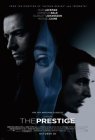
This is a fascinating story of two magicians caught in a game of one-upmanship. I can’t say more than that regarding the plot, without spoiling it.
The movie starts with a scene of just a few seconds, and the question “are you watching closely” is asked, and the scene is gone. Watch that scene closely. 🙂 The plot is a bit hard to follow as it jumps all around in time, without much reference/context other than what you figure out… So this would definitely would be a good movie to watch a second time.
Quotes:
man’s reach exceeds his grasp
man’s grasp exceeds his nerve
society only tolerates one change at a time
obsession is a young man’s game
man’s reach exceeds his imagination
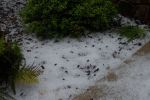
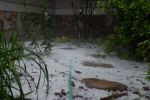
We had quite a storm here tonight, but luckily no major damage other than some plants getting crushed in the garden. We have heard that there are several down trees in town, but have not seen them yet.
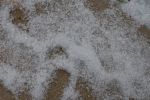
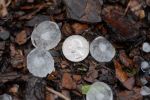
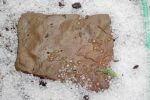
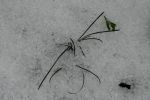
Here are some pictures show all the hail… The storm came at the front of the house, so the courtyard caught a lot. And then the shot with the quarters shows how large some of the hail was. Most were pea size, but some were quarter size!


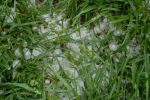
And I did take some video too, though after the storm had mostly passed. No way would I have gone out in that kind of wind, lightening, and hail for just a video!

We saw clips of this in our Wild At Heart study, which made me want to see it again. It had been years, and I had forgotten most of it. Watched in a plane ride to London… It is a good movie, but not great, in my opinion. Many great quotes though (some of these are paraphrases as it is hard to catch a quote in a movie!):
This one made me laugh:
Nobody who did not know how to catch a fish, would disgrace a fish by catching it
I’m still thinking about this one:
all good things (trout and eternal salvation) come by grace and grace comes by art and art does not come easy
On physical exercise:
the body fuels the mind
There were several snippets of poems that I tried to grab… I leave it to the reader to find the rest of these and their authors:
Backward, turn backward
O Time in thy flight
Make me a child again,
Just for tonight!
And:
My candle burns at both ends; It will not last the night; But ah, my foes, and oh, my friends It gives a lovely light!
And:
Thanks to the human heart by which we live,
Thanks to its tenderness, its joys, and fears,
To me the meanest flower that blows can give
Thoughts that do often lie too deep for tears.
From a sermon the father preached:
why is it that people who need the most help won’t take it
…
we can seldom help those who are close to us
more often than not the part we have to give is not wanted
those we live with and should know elude us
but we can still love them
we can love completely, without complete understanding
And finally:
eventually all things merge intto one, and a river runs through it
 2sparrows