A post worth a read….

I read Ben Franklin’s auto-biography last year (see post here), and do recall his “13 virtues.” The Art of Manliness, which I only recently discovered, has been running a series on all of them. Hopefully I can find time to go back and read the others, but this one on tranquility is really spot-on:

Art of Manliness post on Tranquility

The last paragraph matches well with one of my favorite sayings: “You can’t change the people you deal with (or the things that have happened), only your reaction to them.”

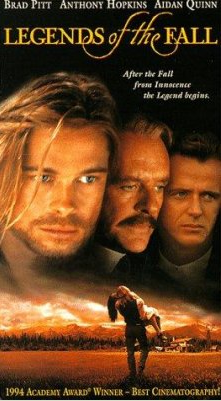
Legends of the Fall.

This was one of many movies mentioned in the Wild at Heart book (John Eldridge), and I bought it and watched it on a business trip on my laptop five or six weeks ago. I wanted Kelly to see it, and I wanted to watch it on a big screen, so we watched it last night. I can say it is definitely worth watching a second time, as many movies like this are. You often pick up on things you missed the 1st time, or, having seen it all the way through once, know when something happens how that relates to how the plot will unfold..

I won’t say a whole lot about it other than it is very good and definitely worth a watch. It is a great story of family loyalty and betrayal. Also, the cinematography is outstanding. (I guess it should be since it won the 1995 Oscar for that category.)

The interesting thing is that in the Wild at Heart book, Eldridge mentions that every man wants to be Tristian, and none want to be Alfred or Samuel. I only saw two events in Tristian’s life that are truly worthy of such honor — one was when he was protecting Samuel in the war, and the other was when he would have taken a bullet for his dad. In many ways he often ran from his responsibilities, or if he did handle them, did not always handle them in a way that I think appropriate. But he was a “wild” man with what he could do and what he accomplished in the “wild,” and I think that part of him is what was admirable from Eldridge’s and most men’s perspectives. (And I should note that in the field manual to the book, Eldridge does mention that there is much in the movie he doesn’t agree with and like.)

Snake Bitten!

This is a post where it would be much nicer to have pictures from the event, rather than the one above that I snagged off a random web page. But I don’t always have that mind-set during an “event” to grab a camera and take pictures. Guess I’m not very photo-journalistic in that sense!

Anyway, we have a 3-board wooden fence around part of our property, and I had put some black netting on part of it at one point to keep deer from coming in. Later we put in woven wire fence instead, and I had forgotten to pull out the netting. Kelly got home and told me there was a snake stuck in the netting, so I grabbed a pair of scissors and a shovel and walked down with Riley.

It was pretty tangled in the netting, and couldn’t really move the upper half of its body. I confirmed it was either a black racer or a rat snake… Or, I should say, I made sure it wasn’t a “pit viper” kind of snake. In this area, the most common is the copper head, though we are just outside of the range of cotton mouths. In NC, there are 6 poisonous snakes, and 5 of them are pit vipers. The other is the coral (“red on yellow, dangerous fellow”). Pit vipers have a diamond shaped head, which is the biggest give away. And then they have fangs that they use to inject venom.

And again, in this area, the copper head is the main one to worry about, and they have a distinct pattern on their bodies. Numerous bold bands red-brown in color or a bit darker on the Northern Copperheads, are spread intermittently along the snake. They are shaped like an hour-glass and wrap around their wide body while creating a pattern with light and dark contrast:

So the snake in front of me was pretty plain — almost black, or very dark brown. Definitely not a copperhead!

Once I was sure it wasn’t poisonous, I went up to where it was stuck and started cutting the net away about 6 inches away from the snake, removed some leaves from a small tree, etc. until I could get it away from the fence. I then used the shovel to move it drive way, and then tried to use the shovel to pin its head down as best I could, and start cutting the net next to its body. It was really stuck — it had looped itself through many of the holes in the netting, and its body had expanded to where the netting was digging into its body. I cut as much as I could, but the snake was really struggling, and getting antsy, so it was hard to hold him down with the shovel.

By this time Kelly and Reece had come down to watch the show! I asked Kelly to go back to grab a flat blade shovel, since the round blade shovel on the gravel driveway was making it really difficult to hold.

I got to the point where I decided I’d have to grab it and cut the rest of the net away. I pinned its body an inch or two below its head with the shovel, and grabbed it with my right hand. I wanted it in my left so I could use the scissors with my right, but it felt more natural for me to grab with my right. As soon as I grabbed it — less than 1/2 inch from its head, it turned and grabbed a hold of my right index finger. It didn’t hurt much, though I could tell it was digging in. Maybe the adrenaline was masking the pain! πŸ™‚ I wanted it in my left hand anyway, so I went ahead switched it, but now my grip was even lower, and of course it turned and bit me again, this time getting many more of its teeth into my left index finger. Again, it didn’t hurt much, but there wasn’t anything I could do but drop it down.

I had blood on both hands now, and Kelly was coming back and was surprised to hear (and see) what had happened!

Anyway, I then proceeded to use the shovel again to pin it down and get as much of the netting as I could. I am not sure I got 100% of it, though it looked like it, but this time when I let it up and it started slithering into the woods, I let it go. I tried to pin the netting to the ground as it left, and think I got most of it. There was only a tiny bit left and it looked to me like it was being drug under its body, and not attached, so hopefully it was mostly snipped or the snake was able to get the rest off. I’ll take a look there tomorrow to make sure it isn’t still around.

According to this page on rat snakes, they are scaly and let out a foul smelling musk when threatened. This one was pretty scaly — though maybe that was due to being torn up by the netting — but did not stink. So I am not sure if it was a rat snake or a racer. The two are often confused. The racer page does say racers bite repeatedly when picked up, and does not say that rat snakes bite. So I lean towards a racer — no smell and it did bite (though it did seem scaly).

Old Emails…

I’ve been meaning to post these for a while, but am just now getting to it.

A few years ago I read the following article:

Why the Future Doesn’t Need Us

For those of you that don’t know, Bill Joy was the Chief Scientist at Sun for years… Anyway, after reading it, I sent it to my Dad to get his opinions, and we had a few emails back and forth over it, that I thought was “blog worthy. (And note that these were written around November of 2001…

First, I sent it to Dad with this intro

I don’t know if you still read Wired or not. It’s Bill Joy’s article from April 2000 “Why the Future Doesn’t Need Us.” If you read it, what do you think? If not, I recommend it.

And he responded with:

The general subject of the article is something I began to think about a little more than 30 years ago. About 10 tears ago, because I believe in God, I decided to put the right answers to the questions raised by the article among what I call “God’s Secrets” which are only unlocked by my faith in Him. So that you don’t think that I didn’t try to resolve these questions before I turned to my faith, let me explain how I arrived at my answer.

This article has either been written or verbalized countless times throughout all of human history. The general structure of such articles or polemics has always been that something is on the horizon that has the
potential to destroy the human race. In retrospect as we look at past instances of this phenomenon, the common thread has always been the “Armageddon lag time” (forces of evil) between the arrival of the threat to

Humankind and the “birth lead time” (forces of good) and the arrival of the solution for Humankind. The antidote never arrived with the poison. We look back and consider all the past instances of such ill-timed threats to have been simple to counter and we can’t understand why they constituted threats to our preservation. We look at ours today and say that these are truly the threats that have the potential to do us in. What we need to think about was the inventory of tools available to each period in history facing such threats and realize that the state of human invention and wisdom for the antidote was somewhere behind in time the state of invention and wisdom of the threat. Since today we have all the invention and wisdom to counter all the past threats, we think that occurred prior to us should have been simple to solve. So today we face myriad threats to our preservation, all of which the counters to each are lagging way behind in our human inventory of invention and wisdom. It’s God’s version of “just in time” inventory management, and it is my faith in him that says He will deliver as he has in the past. So now, let me explain even further how He manages to do that.

There are three laws that God uses to govern His “just in time” inventory management.

1) Evolution and therefore discovery are God’s gifts to us as is all that is made possible by these gifts.
2) What God has made possible Humankind will do; what God has made impossible man cannot know and will therefore not do.
3) The precipice between threat and solution is the discriminator God has placed between Humankind and all else.

This discriminator starts with reason and ends with faith.

Finally, how do I take all of this and suggest where the GNR threat may take us? I believe that for the last three decades we have been standing at the crossroads of Euthenics and Eugenics. I believe Humankind will move off this planet and in order to explore and thrive in the universe it is the promise of GNR that will enable us to be successful. God’s just in time inventory management will enable us to take the threat of Genetics, Nanotechnology and Robotics and turn it into the promise of settling the rest of the Universe.

My response was:

First, let me tell you that I appreciate the time you took for such a detailed exposition. πŸ™‚ I think “John Adams” must still be fresh in your mind!

Second, I know your position that “there is nothing new under the sun,” at least in certain areas of human thought. So it does not surprise me that you say this has been contemplated by humans throughout history. I have not seen such articles, and I find it hard to believe that someone could think that, a catapult, for example, which was the most devastating weapon of it’s time, could cause human extinction. Perhaps the people on the other end of the weapon thought they could be extinguished, and that is understandable. But there is a big difference between a small sub set of humanity and all of humanity. Perhaps we have the advantage now of being more aware of the rest of the world and humanity than they did.

I guess all of that is a side road that isn’t that important. I can see that with the advent of NBC weapons(nuclear, biological, and chemical, for those who haven’t yet read the article), that such thoughts (on the possibilities of human extinction) would be easy to conjure. However, I believe that those technologies require a huge amount of resources, finances, brains, and time, to create. We’ve been lucky that because of that, only rational (in terms of not wanting to cause the extinction of our species) people have developed them. Also, I think that a certain respect for the power is developed because of the effort required.

Witness Pakistan and India, who both now have the power but have not always been rational in their war over Kashmir. (Ok, so the other powers have certainly not always been rational in their conflicts either.)

At any rate, with GNR (genetics, nanotechnology, and robotics), I think things will really changed. No longer will it take huge amounts of resources to create weapons of mass destruction. No time to gain respect. In fact, the time thing jumps out at me. Progress now is faster than it has ever been. There is no time to contemplate what one is doing in grand terms. Also, innovation in these areas is more corporate and less governmental now. All the more reason the time process has sped up. Capitalism at its best!

Not to say that things did not move fast on the Manhattan project. They of course did, and look at the consequences. Thankfully, the technology was not far enough along, and only one side was capable, or the outcome could have/would have been much different.

At any rate, the weapons side is of course scary. Witness the use of anthrax now. That is something that takes tons of capital and expertise, so most likely a government was at least at some point behind it. Perhaps not so now, that is yet to be seen. But the fact is that there are people now using it as a weapon. Smallpox, which has the potential to be much more devastating, is also a possibility.

So, the thought is that NBC weapons can only be created by those who use them somewhat rationally, where rational is just the idea that those who have the power, choose not to utilize it because they don’t want to destroy the world. But witness anthrax as the beginning of non-rational use. Of course, it is highly unlikely that anthrax could cause extinction, but it is a step in the direction of a non-rational person releasing weapons of mass destruction. But with GNR technology, it is much easier for a non-rational person to gain access to the technology.

But all of that is perhaps less scary than an accident with GNR, which could cause just as much, if not more, damage. Again, it comes down to speed of innovation. So here I can see your argument taking a stand. God will provide the solution before we get to the point where it is too late. (BTW, I’ve never heard you talk like that before.) Also, your point about space colonization is, to me, perhaps our only chance. (Again, something I haven’t heard you talk about.) We need to diversify habitats to survive. The chance of mass destruction on earth is great, but has been held in check by the rationality argument, but that will soon be out the door with GNR, in my opinion. I’d put the chances of humankind causing our own extinction quite high unless God steps in. But it scares me when I think of how far we are from being able to colonize in space. GNR technologies will be here long before that.

Will God be on time with this solution? Or could it be a part of the prophesied Apocalypse?

(I also believe God will step in. Either with a solution or the promised end times of this age.)

And finally Dad’s response back:

In the context of this discussion, my “nothing new” position is that God’s “inventory management” system provided Humankind by means of Greek thoughtthe tools for governance and conflict resolution. What He had in mind as the means to conduct conflict down through the ages have tested everything the Greeks provided as the basis for governance and conflict. We have through the years advanced our science of the means to destroy each other, rapidly escalating the time between science based development and counterdevelopment, so that an interdependent globe with instantaneous information overload and proliferation has sorely tested those original tenants of governance and conflict resolution.

My thinking was crystallized on this subject when I took over the Political Theory course at West Point. It had been taught in a very conventional manner by then Major Wesley Clark, now General Wesley Clark, Ret. I had really been into Sagan and O’Neill, and I was a member of the Lagrange Society and L22, so I was reading everything on Space Colonization that I could get my hands on. I was also a member Of the Hastings Institute for the Study of Ethics and genetic engineering was the major topic of the day. So I put together a course that taught all the Western philosophers and I introduced the cadets to the potential of euthenics and eugenics. The objective of the course was to take the great philosophical thought that forms the basis for political theory in the West and considering the potential outcomes of our world being on the crossroads of euthenics (engineering our environment, in this case space) and eugenics (engineering the human body) and produce a thesis that sets up the political, economic, and social basis for the first colony in space. That was quite progressive for the Military Academies in I977. The subject matter was not as controversial as the “no test, just a thesis” for the course grade. I presented this course to the Rhodes Scholar candidates in PP&E.

Let me say that everything from gunpowder (to those that didn’t have it) to the printing press(to the Church) portended the end of humankind. What did they know then? But each was just the next logical step respectively in conflict and communications. Remember plague just about wiped out all civilizations. Introduce it now and we might lose a few, but we could bring it under control in short order. Plague comes close to an example of something being introduced before humankind was ready to counter it. How about if air conditioning had been introduced before we had learned how to control plague. Its introduction to countless more bodies would have been assured.

Now to the point of how many individuals are out there that would destroy humankind given the chance. Try to remember who didn’t find entertainment in the death of human beings at the hands of other human beings or animals a few centuries ago. Could there have been such a thing as a terrorist back then? Terrorism can only be understood in the moral climate of today. When everyone relished games in which people died, the ability to handle WMD is problematic. We have, at least, greatly increased the number of people on this planet who value human life.

Enough for now.

And that was it, unless I’ve lost something… This came up when I recently migrated my mail from my own server to Google, and I was going through some old stuff. Unfortunately, “old stuff” at this point is well over 10,000 mails, so the chance of actually going through them all is probably slim. But I did want to try to pull a few out that I thought others may have interest in.

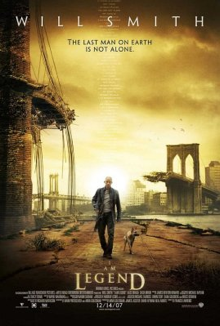
I Am Legend.

Almost more horror than anything, which is not my favorite genre (by far!)… Will Smith has certainly matured as an actor over the years, though his performance in “The Pursuit of Happiness” was probably better…

This does want to make me re-read Stephen King’s “The Stand (Unabridged),” which I think I prefer in terms of this often told story… (Man-made killer virus released on the world.)

Only one quote:

God didn’t do this to us, we did.

Kind of goes with my Dad’s theory that God operates under the “Just in Time” principle of management. I should dig up that email and post it. πŸ™‚

AT: Exercises

Ok, last post on my recent AT hike… I promise. πŸ™‚

I wanted to record here a few of the exercises I should have done before we set out. As I was hiking along, I kept thinking of these, and how I would have been better off had I done them. πŸ™‚

  1. Hiking: This is of course obvious, as it is very hard to get into hiking/backpacking shape by doing anything else, though there are other exercises that will clearly help, and I’ll get into those below. Last year we went in June, so I had a couple of months to hike locally, up to 6 miles, usually with one of the kids in the backpack. In fact I remember taking Riley in the backpack for 6 miles, and how heavy she had gotten, and saying it was the last time she was getting a ride. And it was! This year we went in April, and I just had less time in general to get out and hike. And now with the kids the age they are, I can only really hike hard with Reece in the pack or on my own.
  2. Step-ups/step-downs: I had been doing these a lot last year for my knee, and had kind of moved away from them. It was obvious as I hiked how much I missed doing them! After my recent PT visit, these are back on my routine, as it is clear I still have more work to do in that area, especially on the R side, where I am quite weak laterally, and have trouble staying straight on the step down because of that. Much of that lateral weakness is not due to the quads, but the supporting muscles, especially the hip adductors, so I am working on those as well.
  3. Quads: in general, quad exercises like lunges and squats, would have helped.
  4. Tri-ceps: this one may not be intuitive, but I rely heavily on my trekking poles on both the ups and downs. On the downs, it saves my kness. On the ups, I estimate I am taking 15-20% of the weight lifting off of my legs and putting it on my arms, which means I use my tri-ceps heavily! I would lean towards military presses which work not just the tris, but shoulders and chest as well, all in a way that is similar to how I use the poles.
  5. Shoulder shrugs: this is another one that isn’t obvious, but what I found in my adventure racing days is that my shoulders would get extremely sore and tired from the weight of my pack. By bulking up in the traps, it seems to take that load off… I think this is due to both the strength improvements as well as the additional bulk to distribute the load better.
  6. Aerboic exercises: I was definitely in better aerobic shape last year as well. I think some of that has to do with being sick the week prior to this hike. Running and orienteering are both good, but next time I will add both elliptical and stair-master to my routine.
  7. Yoga: Nothing specific about yoga, other than I think it is the best overall exercise you can do, as it works on strength, flexibility, balance, and even cardio if you do a vinyasa/flow based style.

Lifehouse Skit

This was performed by the youth drama group at our church this weekend, and it literally blew the church away. I thought it was a little “risque” for us, especially the older crowd, but the cheers at the “moment of salvation” and the standing ovation at the end showed me I was wrong.

Very moving…

Into the Wild.

I watched this movie over the weekend, and there were several quotes that I wanted to record as part of my “reading notebook.” Maybe I need to change the name of that to “media notebook,” as I have been putting in some some lyrics and music reviews here and there… I have long considered putting something here about movies — at least those movies that have the strongest impression on me, but have kept putting it off. So maybe this will be the start of a new category. (I have always hesitated in doing this as I don’t want to spoil any movie, so I will likely stay away from a true “review” of the plot, but only give my impressions of it while trying not to give too much away — if that is possible! I tend to do the same with my book reviews, at least for fiction, and hopefully I’ve been at least somewhat successful there)

I read this book by Jon Krakauer some time ago. I checked back through my old on-line reading notebook (before I started the blog), but there was nothing there, so I must have read it before the year 2000. I did pull out the book and put it on my stack to read, as I would like to read it again after watching the movie. And I’m not listening to the soundtrack again, which I bought as soon as it came out. I am still a big Eddie Vedder fan, and to me, he is one of the all time best lyricists, up there with Leonard Cohen, Bob Dylan, Paul Simon, Dar Williams…

So here are a few quotes from the movie:

1. This one really jumps out at me, as in so many ways it lines up with the “Wild At Heart” book we are now reading in the men’s group at church. I will be writing about that book when I finish it:

“So many people live within unhappy circumstances and yet will not take the initiative to change their situation because they are conditioned to a life of security, conformity, and conservatism, all of which may appear to give one peace of mind, but in reality nothing is more dangerous to the adventurous spirit within a man than a secure future. The very basic core of a man’s living spirit is his passion for adventure. The joy of life comes from our encounters with new experiences, and hence there is no greather joy than to have an endlessly changing horizon, for each day to have a new and different sun.”

2. “The core of mans’ spirit comes from new experiences.”

3. Tolstoy:

“If we admit that human life can be ruled by reason, then all possibility of life is destroyed.”

4. Paraphrasing Thoreau:

“Rather than love, than money, than faith, than fame, than fairness… give me truth.”

5. Lord Byron

“There is pleasure in the pathless woods,
There is rapture on the lonely shore,
There is society where none intrudes,
By the deep sea and the music in its roar;
I love not man the less, but Nature more.”

6. Tolstoy:

“I have lived through much and now I think I have found what is needed for happiness. A quiet, secluded life in the country with the possibility of being useful to people…”

7. Another one that goes well with “Wild at Heart:”

“…the sea’s only gifts are harsh blows and, occasionally, the chance to feel strong. Now, I don’t know much about the sea, but I do know that that’s the way it is here. And I also know how important it is in life not necessarily to be strong but to feel strong, to measure yourself at least once, to find yourself at least once in the most ancient of human conditions, facing blind, deaf stone alone, with nothing to help you but your own hands and your own head…” — From Bear Meat, by Primo Levi

Great movie, definitely recommended!