Music Monday January 26th 2009

So far I like Fiction Family, which is Jon Foreman (Switchfoot) and Sean Watkins (Nickel Creek).  Their sound is much more like Foreman’s solo work than Switchfoot, though I like Foreman’s solo work more than Fiction Family.

I also like My Morning Jacket, which is another band that made a lot of top albums last year with their Evil Urges CD… Here is a video from that album:

Leading With a Limp. Dan B. Allender.

leading

This is one of the best, most profound, non-fiction books I have ever read, and I plan to read it again in the future — maybe a year or so from now.  I also need to spend a little time leafing through it and looking at all my highlighted passages and dog-eared pages.  It is the type of book that needs time and reflection to let it really sink in.

I was going to say that I wish I had read this book two years ago, but after thinking about it, I have decided that sometimes, reflecting back with the new knowledge and ideas gained from a book may be more edifying than having gone through certain situations with the book’s knowledge in hand (head?).  Or, to put it another way, the book probably would not have meant much to me two years ago, whereas now it means a lot.

I have read a few business books, and a few leadership books, but never one written from the viewpoint of how a Christian should be called to lead.  Much of what is discussed in the book is leadership in terms of being a pastor, or being the leader of a religious school, but all of the principles can and should be applied to leadership in any situation.  And really, as Allender points out, all of us are leaders to some extent, whether it is with our children at home, or any time someone looks to us for guidance in any particular situation.

Just last week I had dinner with a friend who is an agnostic, but had read Wild at Heart (see my post on that here) based on my post about it, but he was able to put aside the religion in the book and still take something away.  I applaud him, or anyone, for being able to do that, especially when many of the main themes and examples are all religious based.  For any atheist or agnostic leader out there, if you can do that with this book, I would highly recommend it.

It is almost impossible to give a short synopsis of  this book, as there is a wealth of information beyond the basic premise that as a leader, it is best to acknowledge your short comings to those you lead (as well as yourself!).  But beyond that, there is tremendous wisdom in how to structure an organization, how to grow the people within the organization (in terms of character) and the organization itself, how to create the vision and mission of an organization, etc., etc., etc.  Highly highly recommended!

A few quotes that stood out by themselves, but these are just minor one-offs compared to larger sections, themes, and ideas presented throughout the book:

The person who merely puts up with life becomes a manager or a bureaucrat, not a leader.

Courage is almost a contradiction in terms.  It means a strong desire to live taking the form of a readiness to die.  [ This is Allender quoting G.K. Chesterson…]

We always predict the future by reading the present from a frame of reference that was established in the past.

… a dogmatic religious fundamentalist is more similar to a dogmatic atheist than he is to people who share his beliefs but are still seeking greater clarity in their beliefs.  The common link between contradictory ideologies is rigidity or the refusal to remain open to new beliefs and new ways of understanding old convictions.

… growth in character occurs to the degree that we accept being forgiven as a greater gift than life itself.  If the greatest gift is not what I see but how I am seen by the living God, then my gratitude knows no limits.

Music Monday January 19th 2009

I tried a couple “Music Monday” posts last year, but was not consistent at all.  I am not promising to have a music post every monday, but I will at least try to have a few more.

Today’s music is music that I missed last year — music that showed up on a few “best of 2008” lists that I saw in late December — that I have really gotten into the past few weeks.

The first band is Fleet Foxes, which has a very unique, fresh sound in today’s music world.  Check out this claymation video for one of my favorite songs off their album:

The second band is Blitzen Trapper, and their album Furr.  Almost every song on this album sounds different from the others songs, almost a unique genre for each!  Here is an album of their song “Furr” which Riley has been requesting constantly (“play the song where the boy turns into a wolf!”).

And a much darker song:

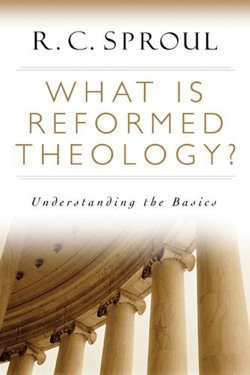
What is Reformed Theology. R.C. Sproul.

reformed

I have been digging deeper into various Christine doctrine recently, and have been really drawn to systematic theology as part of that.  In fact, I have been spending more my Systematic Theology book by Wayne Grudem, and listening to a systematic theology class I downloaded off of iTunesU.  For some reason I have been drawn to Reformed Theology, and I have heard great things about R.C. Sproul before, so this looked like a good book.  Turns out it is a good book, but is lacking in a few areas.

First, what I have heard about Sproul is true — he is a great writer.  He can really explain very complex issues in an easy to understand way, in a relatively short amount of space.  Second, the book is great at explaining concepts using comparisons to other Theologies, such as Roman (Catholic), Arminianism, etc.  This was especially helpful to me, as I am still learning about each of these and still need help separating them from one another.

But when I finished, I found it lacking in a few key areas (though I still would highly recommend it to anyone that is interested in exploring theology deeper and is not very familiar with the Reformed view).

One issue I found is that some key words and concepts are never explained.  I would expect an “Understanding the Basics” book to spend a little more time defining theological terms that a person that is not a student of theology would not know.  Sometimes terms were defined, but often they were not.   Key concepts of Reformed Theology were explained at great lengths and explained very well.  But I found some terms were not defined at all.

Also, while this book covers the key concepts of Reformed Theology very well, it hardly ever mentions key issues that the doctrines arise.  For example, nowhere does he mention how, or why, the Reformed still need to follow the Great Commission in light of the Reformed’s understanding of God’s elect.

Now, I am certainly new to some of these concepts…  The Baptist churches we have been a part of are typically light on the doctrines that tend to separate different denominations of Protestantism.  But I will put forth the MAIN difference between Reformed and others here:  In the Reformed view, the Holy Spirit instigates Faith in Jesus within the Believer, whereas other views tend to hold, for the most part, that the person himself makes the decision to have faith.   And here instigates is probably not the proper word, as I think both Reformed and Evangelical would hold to that.  With Reformed, it is the Spirit that believes — so God is really doing all the work in his elect to bring the person to salvation.  The believer does not make the choice at all.

I certainly see where the Reformed view comes from in light of the Scriptures presented by Sproul in this book and in other resources I have been looking at, but I still need to dig deeper.  In fact, this is a book I will read again in a year or two, after I have had time to read other sources and grow my understanding.

I’d love to hear from anyone in the comments if this main difference I am perceiving is accurate.   (And I do know there are other differences, but it seems to me this is the key difference.)

Two quotes:

The ultimate form of idolatry is humanism, which regards man as the measure of all things.

The disappearance of theology from the life of the Church, and the orchestration of that disappearance by some of its leaders, is hard to miss today but, oddly enough, not easy to prove.  It is hard to miss in the evangelical world — the vacuous worship that is so prevalent, for example, in the shift from God to the self as the central focus of faith, in the psychologized preaching that follows this shift, in the erosion of its  conviction, in the strident pragmatism, in its inability to think incisively about the culture, in its reveling of the irrational.  (Here Sproul is quoting from No Place for Truth by David F. Wells.)

Q4 Workout Goals Final Post.

This post is a bit late, but better late than never.  I won’t continue to bore everyone with my workout goals by quarter, but since I had originally posted the idea and spreadsheet here, I thought I should at least post the final numbers.  As you can see, I did pretty well, though fell quite short on yoga.

I hope to improve that in the current quarter!  My new goals have more push ups, no dips (though I will still do them), more running, squats/lunges, I have separated hiking from other aerobic, and things like that.  I  have also added other more concrete goals like run a 23:30 5k on the treadmill (a far cry from a few years ago when I was consistently in the low 20:00’s, but I am slowly getting better), trail run for 1 hour, etc.

q4-workouts

Slumdog Millionaire. 2008.

slumdog

I heard about this movie from a couple people — that it was great — but I really knew very little about it.  Just the high level story of a boy who wins “Who Wants to be a Millionaire” and then the look back into his life about why and how.  But I had no idea beyond that, and I won’t divulge more here.  Let me just say that it was a very good movie, and if you have not heard of it, don’t let that hold you back from going to see it!

I actually didn’t decide to see it until about 9 p.m. while finishing dinner in Old Town VA, and then I had quite a hike plus tram ride to get to the theater for the 9:50 showing.  It finished up around midnight, and I then had a 40 min hike across Alexandria and Old Town to my hotel.  I could have jumped into a hotel and gotten a cab, but that is a pretty safe area, and I love to walk.

Delicious Library 2

I learned of a new mac application today on another blog, and got to play with it a bit.  It is basically a media library “organizer,” though I likely will just use it with books.  It automatically pulled in all the music and movies from my iTunes library, so I do need to play with that a bit more.

The cool thing about books is that you can hold up the book’s UPC symbol to the mac’s built in iSight camera and it will attempt to scan it and pull in all the relevant info.  (You can also use a bluetooth scanner…)  I tried this out on about 30-40 books, and it was about 90% successful.  The ones it failed on were Borders Classics books, and it appears that Delicious gets most of its data from Amazon, so that would make sense.

For books, it allows you to create “shelves” and drag and drop books from the library to the shelves.  It also allows smart shelves, though I have yet to play with that.

I added a link to my “blogroll” but here is a direct link to my published library.

My Books

So far I like it, but there are a couple of key features missing.

The main feature I want is to be able to publish my “reading notes,” which I post on the blog, from the library manager.  There is a place to add a “personal synopsis” and that would be ideal for keeping my notes.  But I also want them published to the blog, and there is no way to do that.  Since that is not possible today, I would at least like some way to tie the  blog post to the book in my library.  I am still working on that.

Also, when published to the web, if you click on the book cover, it only shows either my synopsis, if I have added one, or Amazon’s.  But there is a bunch of other cool info in my manager that is not published, such as details about the book (size, pages, date published), quick info on reviews from amazon, etc.   I am trying to figure out if I can have any other information that I can see linked to my public page.  If I can’t, then just copying my notes from my blog into my synopsis may be the way to go, though I really want Amazon’s summary plus my notes available…  :-/

There are a bunch of other cool features, though I don’t know if I will use them all.  But so far it seems like a handy tool and it is fun to “publish” my library and reading lists in a more visual way.

Let me know what you think.   Is seeing a “virtual copy” of my library on the web cool to anyone else?  🙂

Reading List 2009

ancient_books

Last year was a year of much secular philosophy, mainly due to reading four Ayn Rand books, so this year I thought I would go the other way.  I have gotten very interested in Reformed Theology recently, so I plan on working through a few books on that including the original Institutes of Christianity by John Calvin.

Here is my current list, in no particular order.   A few of these I have already started, and I am sure more will be added as the year goes on.

  1. The Pilgrim’s Progress, John Bunyan
  2. In Depth Study of Romans
    • For some reason, Romans has come to me from a lot of angles the past 6 months, starting with an unexpected, long theological conversation I had with a Catholic Priest at Gatwick airport.  Since that time, it continues to work its way to me one way or another…
    • Have not picked one out yet, but I’m looking at this one.
  3. ESV Study Bible
    • I picked this up as a Christmas present for myself, and would like to work through it all, but I will probably go for a 2 year plan on this rather than the one year — my reading list for this year is already pretty substantial
  4. The Institutes of the Christian Religion, John Calvin
    • Reformed21 is doing a year long blog study on this, but my book won’t get here until 1/16!  😦
  5. My Utmost for His Highest, Oswald Chambers
    • This is a daily devotional type book so I probably won’t read it all this year, but I would like to get it at some point and have it around.
  6. CCIE Security book
    • Need to pass CCIE Security written by 7/1!
  7. Chi Running. Danny Dreyer.
    • A book on running form, hopefully to continue to work on my knee issues.  I have been running more and have not felt the knee too much.
  8. What is Reformed Theology, RC Sproul
    • I am already 1/2 way through this — excellent so far!
  9. Yoga Anatomy
  10. Leading with a Limp
  11. The Screwtape Letters
    • I’ve already read this, but I’d like to read with Kelly
  12. The Tale of Despereaux
    • I think I need more fiction!  This was a great movie…
  13. In Cold Blood, Truman Capote.
    • After watching Capote a few weeks ago, I definitely want to read these.
  14. Breakfast at Tiffany’s, Capote.
    • Ditto above…

I think this is a fairly balanced list (workout/athletic, Bible + Bible Study, Biblical based fiction, “fun” fiction), though it is a little short on fiction and is unfortunately missing a “classic” — along the lines of the the books listed in “100 Must Read Books List.” I normally do try to read one or two of those a year.  Hopefully I can fit one in, but right now this list is daunting enough!

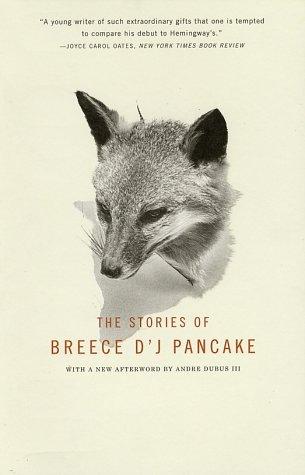
The Stories of Breece D’J Pancake.

breece

Last year I came across a book of short stories that mentioned The Stories of Breece D’J Pancake, and I finally got around to reading it.   Pancake’s stories garnered a lot of critical acclaim, yet he committed suicide at the age of 26, and these short stories are all he left behind.

I have to admit that I was not that impressed in the 1st half of the book, but thought the 2nd half was much better.  However, the 1st half was read about 20 hours into the 40 hour trip back from Australia.  So I decided the re-read the 1st several stories, and they were better than the 1st read!

The writing is direct and often dark, but engaging.  Worth a read if you like short stories, which seems to be a lost art these days.