2015 Strava stats

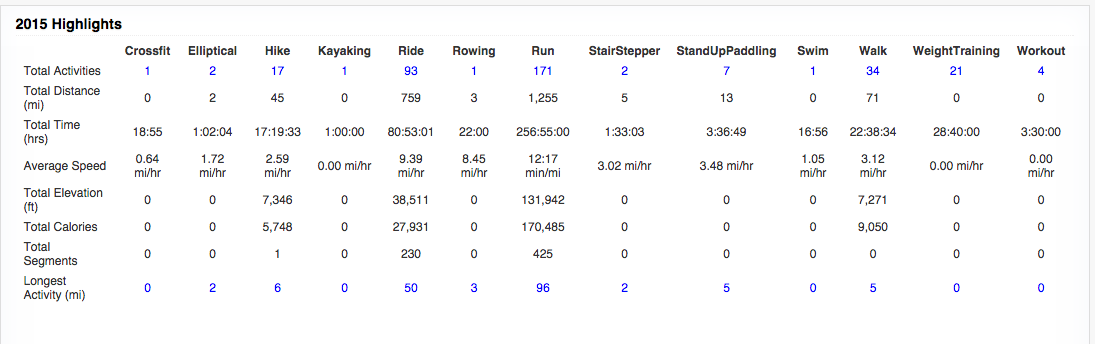
Here are my 2015 Strava stats:

strava-2015

compared to last year:

strava-2014.png

Though last year’s post says I started using Strava exclusively sometime in July (2014), and while I tried to transfer things over, perhaps somethings were lost.

Looking at 2015 I see some of the same problems I had in 2014 — I need to work heavily on strength, especially leg strength and core strength, to improve my running.

For 2015 in review, I did have solid runs at Uhwarrie 40, Jordan Lake 12 hour (53 miles), 75 miles on the AT, at Hinson (83 miles), and Pinhoti 100.   Jordan was a bit of a struggle with stomach pain and the AT was just hard all around, but overall those were 5 very solid ultra runs for me.

In 2016, beyond strength, I will continue to work on my mountain biking.  I also somehow need to work on mobility — some kind of movement practice like MoveNat or the Mobility WOD or even getting back to some yoga.  Something to reverse some of the “damage” just running and riding cause!

For races, it’s still coming together, but I’m definitely in Uhwarrie 40 in February, Mountains to Sea 50k in April, and Hinson Lake 24 hour in September.  I need to find a long mountain bike race or two, and need to get a WS100 qualifier in so I can keep increasing my tickets in the lottery, I’m just not sure which races I’ll choose yet.  It should all be finalized in the next week or two.


Pinhoti gear and fuel

I realize I left out food and gear from my race report, so here’s that info:

Gear

  • Altra Superior 2.0 and injinji toe socks for 69 miles, Hoka Stinson Evo and Balega socks for 31 miles.  I lost one of the Hoka’s at the race finish, but those have been around for 2.5 years so it was time anyway.
  • Tobacco Road Marathon calf sleeves, started with them more for warmth than the supposed compression benefits, kept them for protection from the trail which was overgrown in some places.  Also started with arm warmers due to the start temps, quickly took them off.
  • Nike combat pro compression with a Prana Mojo short the entire race.  I use these shorts for everything — running, hiking, biking, swimming — the later was quite appropriate for the weather!
  • Ice breaker sleeveless top until mile 69, then icebreaker 200 weight half zip top the rest of the way.  Ultimate direction rain shell for most of the race — amazing light weight and kept the water off.
  • Florida coast to coast buff — something that’s been with me for every major race for 12-13 years.  Under Armor fleece hat,  plain black wool buff.  A couple kinds of gloves.
  • UD AK vest for the 1st 55 miles, UD PB for the last 45.  Just used two handhelds the entire way.
  • Petzl tikka rxp and a fenix PD32 UE (that I never used).
  • Carried duct tape, vasoline, and the like.

Food

  • Vfuels were again a constant, I can always get those down.
  • I had one pack of UCANN to start, and had more in my drop bags, but never felt like that is quite what I wanted/needed.  The non plain versions come across as VERY sweet.
  • I also carried these amazing “chewy balls” which are peanut butter, oats, dark chocolate, honey, etc.  But for some reason, after the 1st 5 or 6, I did not care for any more the rest of the way.
  • Epic bars — both Bison and Bacon — these are always good.  🙂
  • MAPS (BCAAs) — tried to shoot for 5 every hour.
  • Endurolytes – with the humidity during the day I thought a few of these would be worthwhile.
  • Vitamin I — really trying to get away from this completely but I’m not quite there yet.  I think 400mg every 5 – 6 hours.
  • I had a Bonk Breaker or two for the 1st time, and they were pretty good.
  • From the aid stations:  bacon, egg, cheese, quesadillas; tomato soup; broth with rice; ramen with noodles.  The warm broths were very welcome all night in the cold weather!


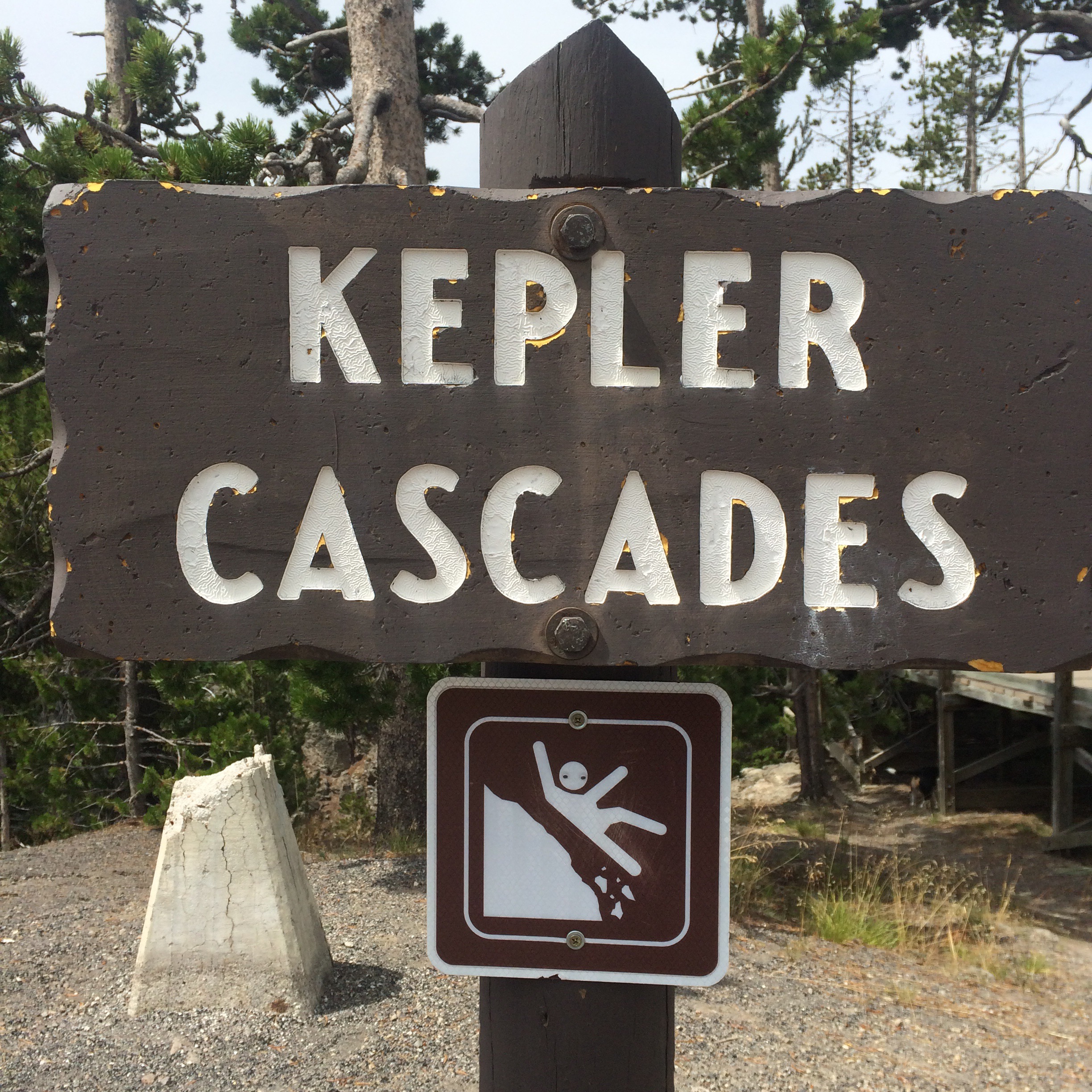
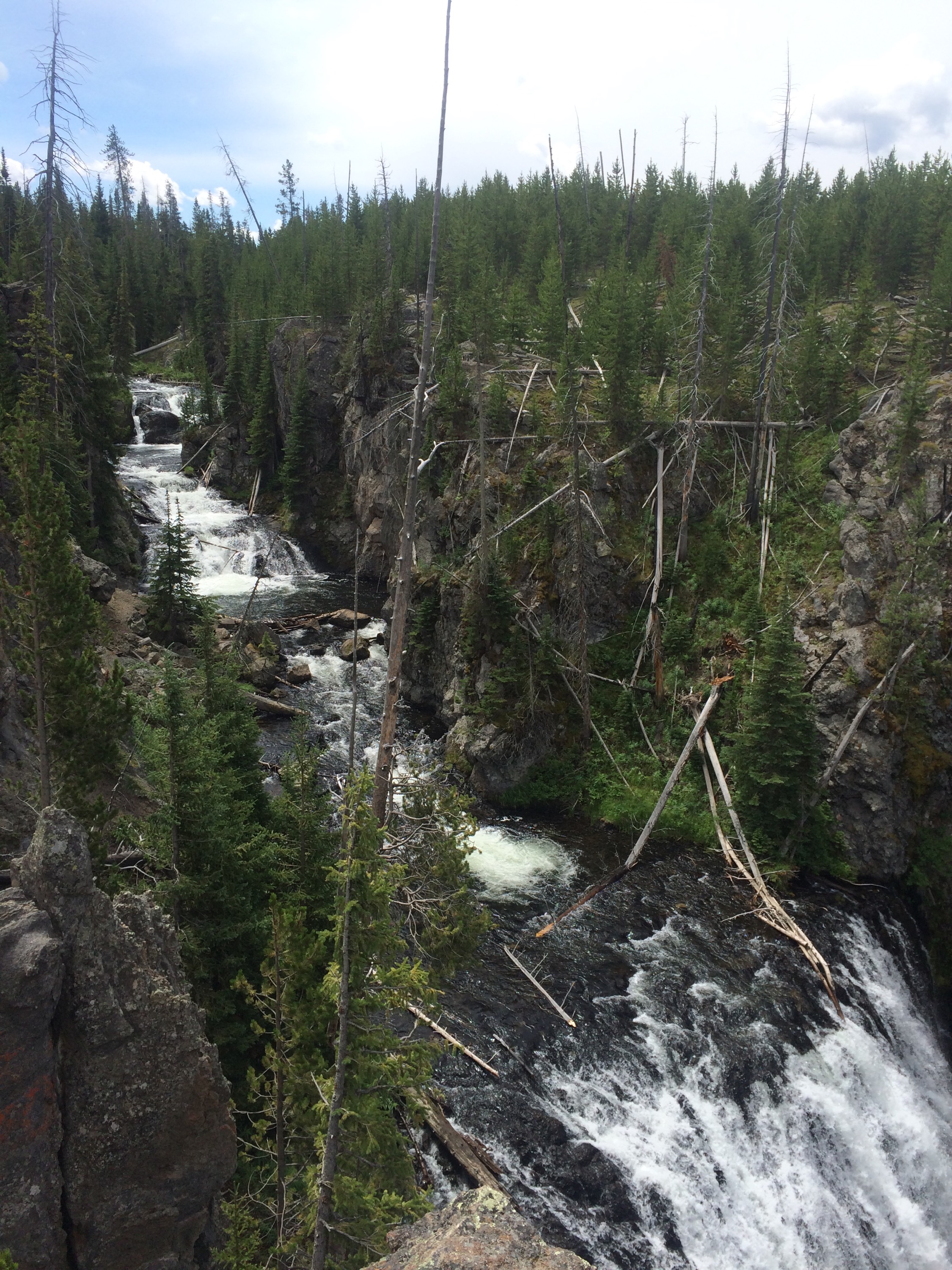
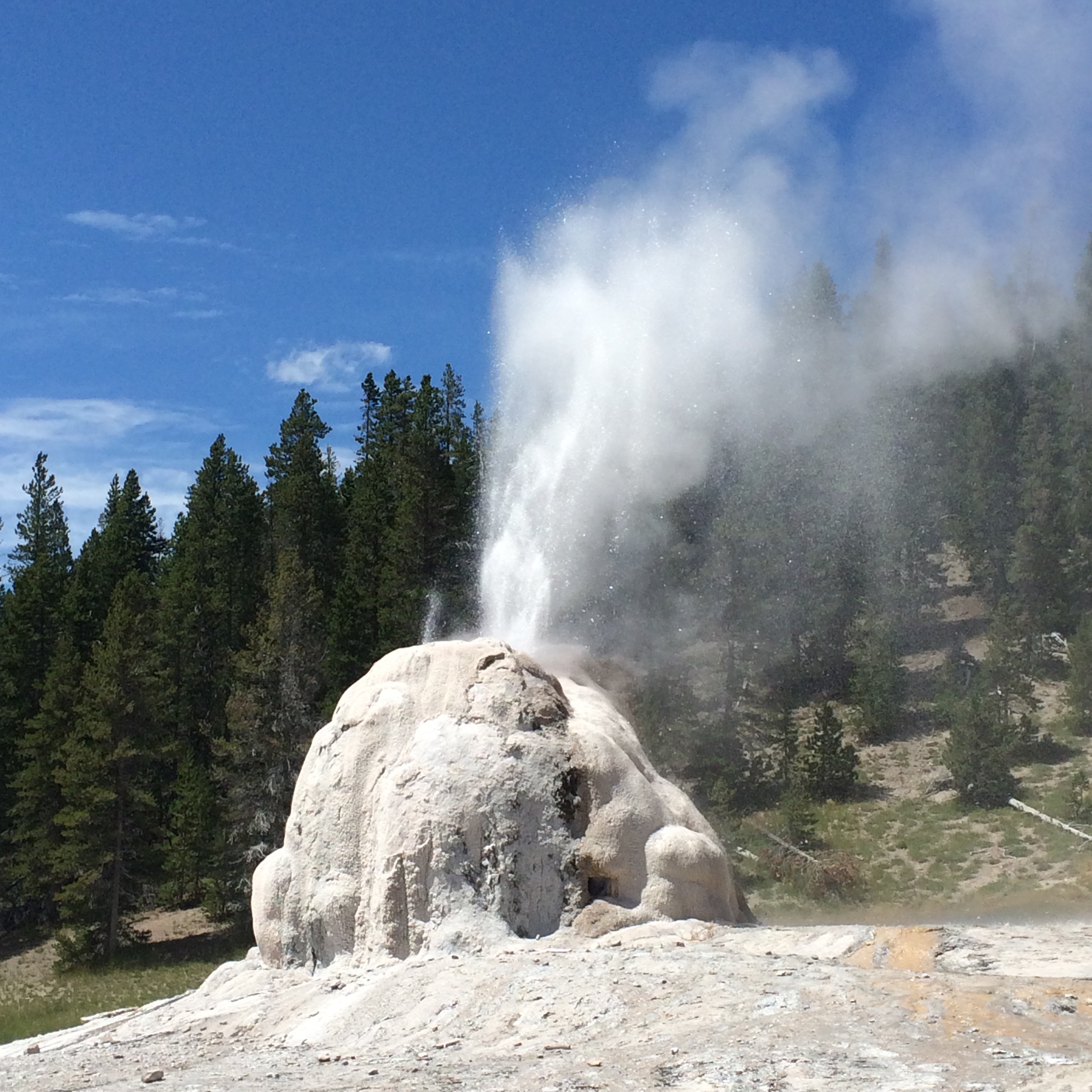
Spring Creek Trail to Lone Star, Yellowstone

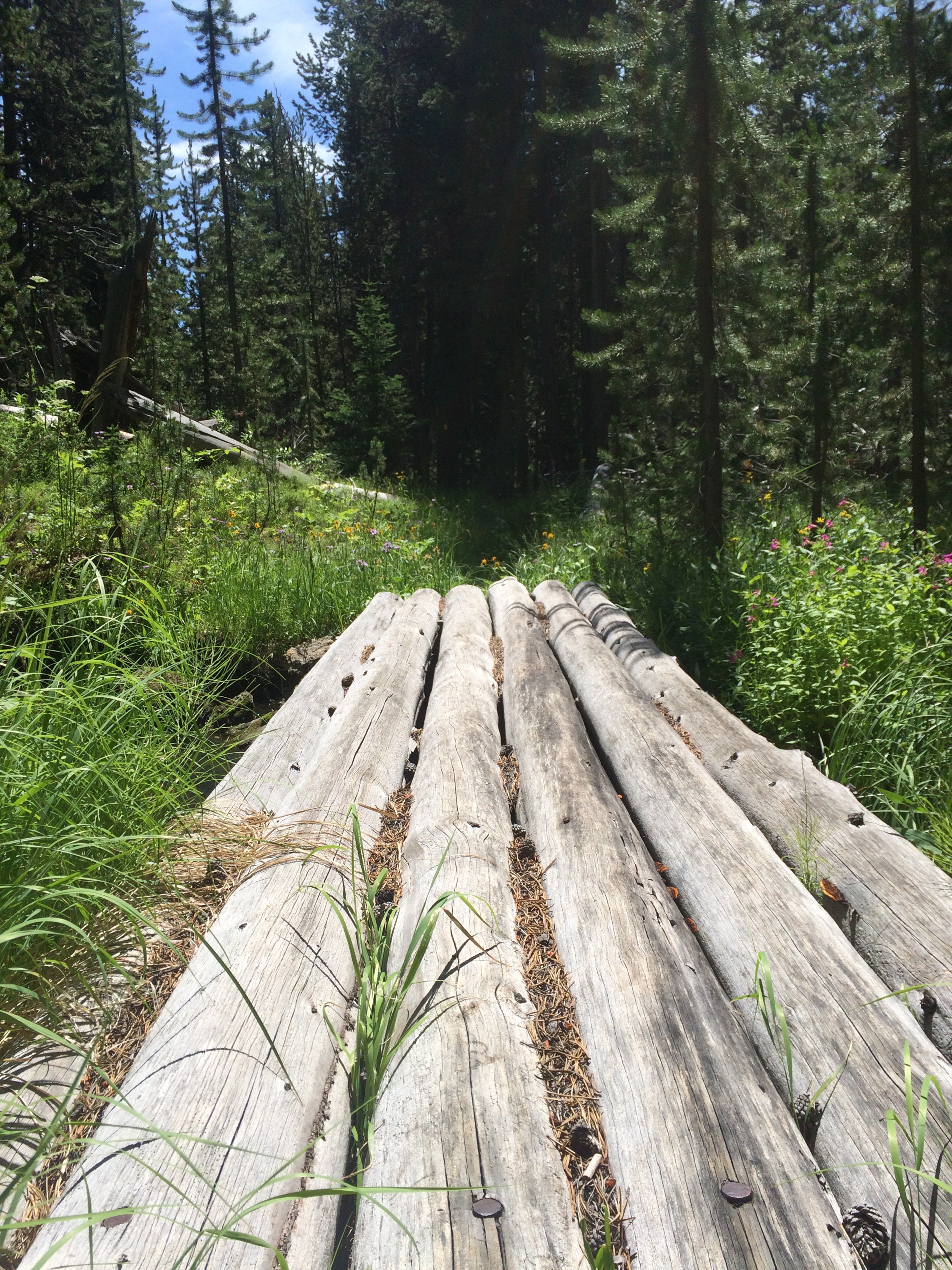
This was an almost disaster from the start, but it all worked out.  One of our guide books suggested taking Spring Creek Trail  to the Lone Star trail, rather than the Lone Star trail from Kepler Cascades, to shave off over a mile on the 5+ mile round trip.  R2 and I decided to run there to make it in time for a possible eruption of the geyser.  It was beautiful, but overgrown in many places — seems like this trail is not used much.  That was confirmed when R2 and I ran into a ranger who said he hadn’t expected to see anyone on that particular trail!

R2 and I continued on, but eventually I started thinking something was amiss…  We should have been to the trail intersection some time ago if the guide book was correct.  After an extra half to three quarters of a mile, I decided to turn back and find Kelly and R1.  When we met up a few minutes later, I decided to run forward and see if I could find the intersection.  It was roughly a half mile ahead, so we decided that Kelly and the kids would press on, I’d run back up the trail, get the car, and drive down to the main trail head.  I took off and made it a little over a mile before I realized I did not have the car keys — I had given my pack to R1 to reduce weight while running back.  So I turned around, ran back, and eventually met up with the family on the main trail, and walked in to the Geyser.  Somehow with all the extra time on the longer trail we made it!  We were treated to a good show, though perhaps not a full eruption, but still cool to see our 1st geyser.   

We decided I’d run the main trail back and hitch a ride to our car, so I took off.  Less than 5 minutes later, I realized I again did not have the keys!  Ugh!  So I ran back, then walked with the family a bit, before running a couple of miles to the trail head.  I had met a father-son hiking duo about .75 miles from the trail head, who said they’d give me a ride, but opted to run on to see if I could get a ride a bit quicker.  I got to the parking lot and was about to stick out my thumb, when the “Amazon Couple” we had met at the geyser and who rode  their bikes to their RV were pulling out, and let me hop in for the 3 – 4 mile ride back to the car.  (I call them the “Amazon Couple” because they are basically park hobo’s living out of an RV, but had worked at Amazon in over the winter to help fund their life style.)  

I got back in the rental car, drove to the main trail head, walked down the trail, until I met up with everyone.  We hiked out, and then drove down to Old Faithful, before heading up to the north of Yellowstone to our hotel for the 2nd half of our trip.

I ended up with roughly 9 miles of hiking and running, mostly running, all in my Luna’s, with terrain varying from a bit of paved path, single track, rocks, swamp/marsh, etc.


Grays and Torreys

After two 14er’s in two days, why not try to knock out two more on my last day in CO?  Ben and I met at about 6:00 a.m. at the bottom of the approach road to the parking lot to Grays and Torreys, and I jumped in his car for the trip up the fairly unmaintained road… Well, on the way down there was a road scrapper working on it, which was a good thing as the ascent and a pretty sketchy section were many people opted not to park.  In the FJ Cruiser, it wasn’t too bad.  When we did make it to the parking lot, there were several other cars there so we weren’t the only ones that took the gamble.  🙂

Ben had recently run this route — twice in one day — and done the 1st loop in 2:38.  I was thinking anything under four and I could still have time for lunch, a shower, and time to get to the airport!  I was feeling pretty tired from the prior three days — nearly 10,000 feet of vertical, much of it above 10,000′ feet!  So I knew I’d be slow, but 2:38 would not be possible for me unless I had a lot of time to acclimate!

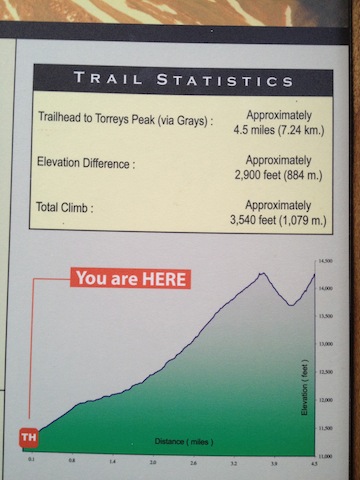
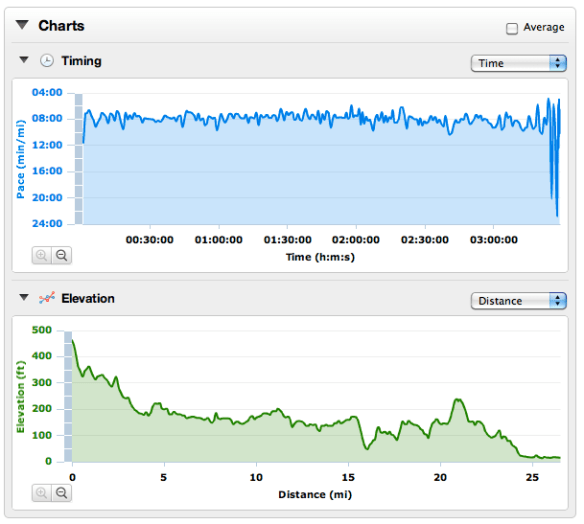
Here’s the elevation profile for what we were about to start:

The bridge at the parking lot that leads you to the trail…

First shot of Greys with the sun just coming up…  The approach trail is relatively easy, and we ran a little of it, but as I said above I was pretty tired already so I needed to save some energy!

Me atop Greys:

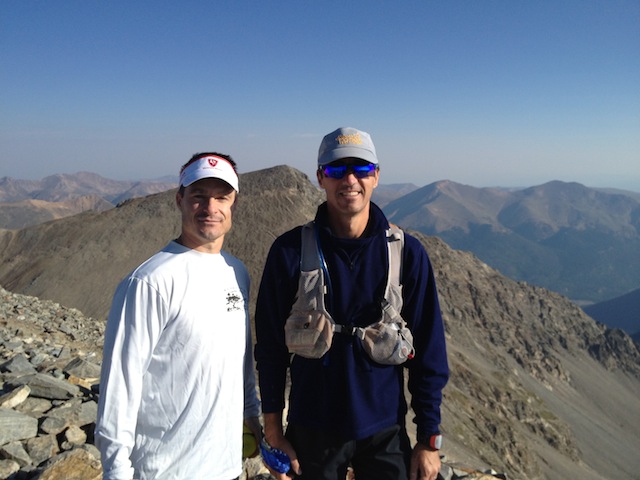
Ben and I…

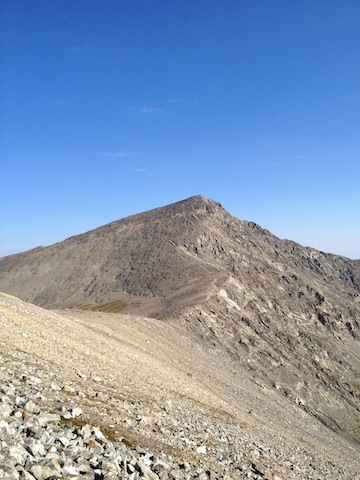
This is the trail up Torreys… It was steeper in real life!

Atop Torreys… Four 14ers in 3 days!  (Yeah the record for all 54 is 10 days, so 4 in 3 is not that great.  😉 )

We hiked down the trail to the parking lot, started driving down, and asked a couple if they wanted a ride.  They had a two mile walk as they had stopped below the washout — which had now been fixed by the road scraper!  After that we headed to Idaho Springs for pizza and beer at Beau Jo’s…  An old friend was in the area so she and her family came by to chat for a bit, before I had to rush off to shower, change, drive to the airport, etc…

Boston Marathon 2011

2010 – The Seeds are Planted.. Last year, I was able to watch my Dad and sister run the Boston Marathon. I covered about 15 miles of it on foot, and the seeds were planted. I last ran a road marathon in 1993 — the Marine Corps Marathon. Since then, I’d somewhat lost interest in roads, and, in fact, only in the past 6 or 8 months have I run any road races — a couple of local 5k’s.

But, Boston is special. I knew it then, just watching Dad and Kim run, and I told them if they were going to do it in 2011, I’d love to run it as well.

2011 – The lead in… One of the (many) reasons Boston is special is because you have to qualify. For me, a 40 year old male, that means a 3:20, or a 7:38/mile pace. I’m close, but certainly not there (yet!). This spring I’d run about 6 or 7 miles at that pace. Adding 20 more would certainly be tough! Other ways “in” are by running for charity, and this year my friend and co-worker Greg raised ~ $8000 for the Children’s Hospital! Way to go Greg! And then there is another way in — comp’d spots. Last year my friend Jeff got in via Addidas — then again, he was able to run 2:45.

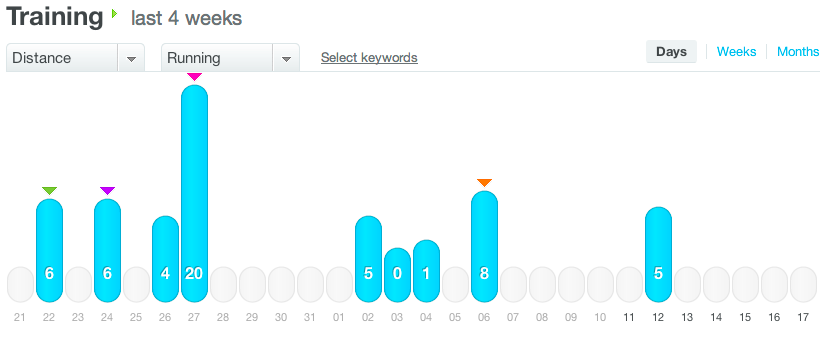
I was able to run via a “comp’d” spot (thanks Dad!), though I’m no 2:45 runner! And the comp’d spot didn’t become official until just a few weeks before the race date. I have to admit, after my 40 mile run at Uhwarrie in February of this year, I was ready for a break from running. And with the Boston registration not being fully confirmed until just prior to the race, I had lost motivation and my training really suffered. Additionally, I traveled a lot the prior three weeks before Boston. Here’s a graph of my running from Daily Mile:


Looking back, I had run an average of 15 miles per week the 10 weeks after Uhwarrie leading up to Boston, and just 6 miles per week the last 3 weeks.

Predictions… With the lack of training, I thought at best I could manage a 3:45, or about an 8:30/mile pace. My sister Kim, on the other hand, had run four 20 miles runs — at tempo! I knew she was running fast and strong and thought she could break 3:30.

Boston is special… Boston is special for a lot of reasons. Last year I had a fantastic weekend, spending time with Dad and Kim… Lots of good food, the marathon Expo, a trip to the American Girl store in Nattick (:-/), great conversation, etc. And following them on the run — seeing the crowds along the route in all the different places such as Wellesley College, Boston College, etc. was amazing. This year was no different and just as great. In fact, Kelly was able to fly up, so the four of us shared an amazing weekend in Boston.

All weekend, Kim and Dad said I was “sand bagging,” but I really did not think so. I would have been super happy with a 3:45. Kim even said she would not talk to me again if I beat her. But I knew she was going to be the stronger runner…

The night before… With my lack of training, and therefore lack of confidence, I thought I’d read Ryan Hall’s book, in which he described his training for last year’s race. Much of it is just his daily training log and reflections, so probably not much interest to non-runners. I read the intro and the race day entry. The Intro had Ryan’s insight into finding God’s joy in running, with the following Bible verse:

These things I have spoken to you so that My joy may be in you, and that your joy may be made full. — John 15:11

Ryan speaks of the Joy he found in running when he was able to just run, and drop all the goals and expectations surrounding his running. As America’s fastest marathoner, he had a lot of expectations placed on him. But when he let all of those fall aside, and run for Joy, he really found his groove.

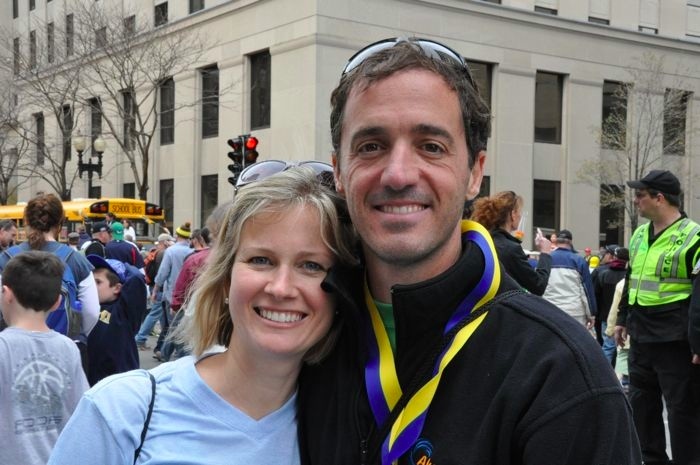
Race Day I slept well, only waking up just once during the night and my alarm actually woke me — normally I wake several times and always just before the alarm! I had a quick breakfast of eggs and the like at the hotel restaurant, and then we walked to loading point where the many many buses were waiting. Here’s a shot of the people waiting in line, and Dad, Kim, and me waiting as well.


We rode the buses to the start in Hopkinton, which takes about an an hour. TheAthlete’sVillage was full and bustling, but not for long. We were in the 3rd wave, which started at 10:40, so the village cleared out pretty quickly as the other two waves headed to the start. Just before we left the village, I ate a chocolate glazed donut Dad had bought from Dunkin Donuts that morning — gluten problem or no, I wanted one of my favorite treats and figured the sugar would give me a good rush! 🙂

The Start…

It was finally our time to go, so we first had to find our bus to put our drop bags in. Dad and I had very high numbers, and our bus was outside the village which took a while to find. I dropped my warm clothes and just kept my arm warmers and a black garbage bag on to stay warm and keep the wind off. It took Kim a while to find us after she had dropped her things, and then we started making our way to the start.

Wow, it was crowded! In fact, the 2nd wave had not even made it past the start, so those of us in the 3rd wave were kind of stuck for a while. Eventually we made it towards the starting line, and then headed towards our corrals. Dad was in corral 9, and I was supposed to be there as well — neither of us had marathon times submitted on our applications. Kim was in corral 1 as she had run a 3:49 last year. I wanted to sneak in there with her, so we made our way in that direction.

Due to the delay with wave 2, we had to jump out of the crowd and run on the grass and side walk towards the front. We arrived at the gate to corral 1 and there was a large crowd trying to get in. The “gate guards” were actually checking the corral numbers on the bibs! I hoped to sneak in with the garbage bag covering my number, but I wasn’t so sure it would work now. But then the announcer stated “one minute to start,” and the gate keeper of corral 2 dropped the rope, and all of those runners moved forward, and the gatekeepers at corral 1 were over run, so I was able to sneak in. 🙂

As we got into the corral and moved forward, the gun sounded and the race was off! I lost Kim in the 1st few seconds… She took off, and I had a head phone malfunction. As I was trying to get that adjusted, I lost her, and had no idea where she was!

The 1st few miles The race starts downhill for petty much the 1st 5 miles. I wanted to get some separation so the crowd wouldn’t be too bad, so I had a nice little tempo going. Kim was gone, but I kept looking for a pink shirt in front of me, and run for it, hoping to find her. I looked at my Garmin and saw 7:40 pace — oh no, too fast! I told my self to slow down…. But every time I looked at my pace (and I tried not to look too often) it was at 7:40…

Slow down….. 7:40. run run run 7:40

Slow down…. run run run 7:40

It felt easy and smooth.

Slow down. run run run 7:40

Slow down. run run run 7:40.

Ok, you get the idea.

After about 5 or 6 miles, sometimes high – fiving all the kids on the sides of the road, sometimes just running with ease, I thought I should just go with it. 7:40? That’s just about my BQ pace. Yeah, it’s almost a minute faster per mile than I thought I would run, but let’s just hold it as long as I can, and see how it goes. It felt good. It felt right. I was running with Joy, and it was awesome. Boston is special! The crowds were awesome. And it felt good. I figured it would catch up to me at some point, but who knew when, so why not just go with it?

Mid-way Kelly said she wanted to see Wellesley, about mile 13, so we told her to hang out on the left side of the run. The right side would be full of the “Scream Tunnel” girls giving out kisses and creating all kinds of havoc. 🙂

So around mile 12.5 I started looking for Kelly, enjoying the atmosphere all along. I saw her long before she saw me. In fact, I was jumping up and down and waving my arms, but she didn’t see me until I was right in front of her. I was there a little earlier than expected. 🙂

So she didn’t get any pictures of me running up towards her, but I’ll have the memory in my mind forever.  I gave her a big hug and kiss and said I was going way too fast, but I felt good. She said “where’s Kim?” and that was really the 1st time I thought I might be in front of my sister… I knew I was running fast — much faster than I thought I could (sandbagging?) but Kim had taken off at the start and I had not seen her since — even though I was diligently looking. But if Kelly had not seen her??

Here’s the photo Kelly took of me as I turned back to her…
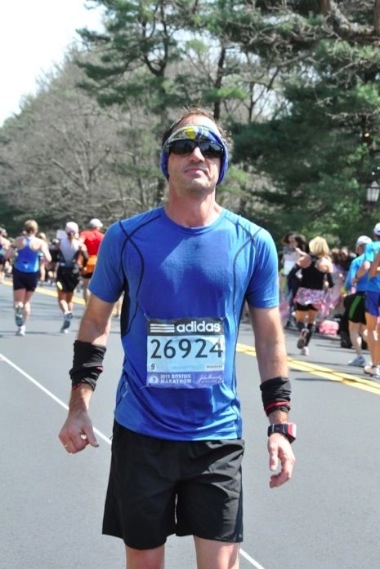


Here’s one of the photos of Kim that Kelly was able to take – a minute or two after I had passed – I was in front!  (I still wouldn’t be sure of this for quite some time…)


15 – 21…. At mile 15, I was still amazed I was holding something like 7:41 – 42 pace. How long would it last? I hit all the hills in this section, the three famous hills culminating with Heartbreak Hill, still feeling good. I came out of the hills at about a 7:46 pace. Could I get any of the lost time back? I wasn’t sure, but I tried to open it up on the down hills. But here I was finally starting to feel the early pace…  And starting to slow.

Around mile 19 or so, I heard someone yell “SEAN!” Wow, my name, out here, in the middle of a million plus spectators. I didn’t have a name tag on — BTW, if you ever run Boston or any big marathon, put a name tag on! Everyone yells out for you. 🙂 I turned back and saw my friend and co-worker Todd. He had spotted me in all the sea of runners!  That “game face/mug shot” photo on Facebook the night before worked!  Someone knew what to look for!  That gave me a lift, but I was definitely starting to hurt.

Somewhere around mile 8 to 10, the crowd of runners had became thick. We had caught the 2nd wave…. And it kept getting thicker and thicker… Miles 18+ was wall to wall runners and I was having to run around them quite often.  Now the water stations become much harder to navigate — in fact, towards the end, some runners were stopping right in front of me!  Due to all the maneuvering, my Garmin shows I ran about a 1/2 mile further than the 26.2 of a marathon. :-/

The Finish

Miles 21 through the end were a a bit of struggle for me. The early pace had certainly caught up to me, but I did not totally fall apart. I passed many runners that had succumbed to walking. I never quite reached that point, but I did slow down.

At this point, let me put in the pace charts for Kim and me. Kim’s husband Paul, and Dad’s wife Nadia, were watching our splits “live” — Paul in Denmark and Nadia in SC. They watched me slowly build a 2 minute lead on Kim, but then watched her cut it down, closer and closer and closer. Would she catch me? Paul said it was a better than watching a football game…


Well, that gives away the finish…. With about a mile left, I heard a voice next to me: “Do you want to finish together?” Well, there Kim was after all those miles… I said “I don’t think I can,” and she responded “Yeah, I think I’m going to throw up.” I said I would try to stay with her.

So I tried, and maybe did for a minute or two. But it was crowded, she was flying, and I did not want to finish Boston throwing up at the finish! I let her go a little — or I should really say I couldn’t hang with her pace, but when we made that last turn where you can finally see the finish –a good half mile to go, I thought I’d give it one more go. A nice little (slight) down hill, open up, and let’s see what happens.

I would have loved to have kept up and cross the finish line together. But I couldn’t do it — she was too strong, I was too far gone, and she finished about 20 seconds in front of me. But she also broke 3:30, (3:28) which is where I thought she would be, and I finished just behind her.

I’m not complaining — 3:28 was 17 minutes faster than where I thought I would be. And granted it was a great day for running with gorgeous weather (though a touch warm for those of us in the last wave) with a nice tail wind, but I had one of those special days. I had found Joy in running. At least the 1st 18 -20 miles or so. 🙂

Kim and I made it through the finish chute grabbing all the goodies — food, water, etc., and eventually to the buses with our drop bags. I was able to get my bag, which had my phone, and I called Kelly to see where she was so we could meet. I also saw texts from my Dad saying:

“Absolute frigging amazing… I knew you were sandbagging!”

“I am so proud of you. You are a real man and brother allowing Kim to beat you!”

Let me just say right now — it was not me “allowing” Kim to beat me — she was definitely the stronger runner!

It was at this point that I realized Dad had dropped out early… His travel schedule had limited his ability to run, and when he finally did attempt a long run a few weeks prior the race, he strained his calf, so he had not run since then. A few miles in to Boston, his calf flared up, so he took the train back to Boston.

Kim and I eventually met up with Kelly:
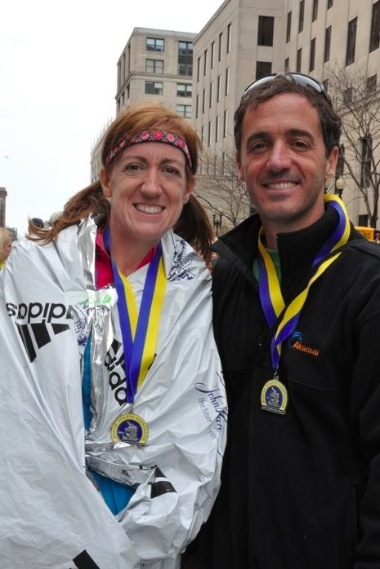


Recap

Let me just say again that Boston is special. (Have I said that already?? 🙂 )

I am not a “roadie,” but Boston was worth it. I had lost interest a bit, but I am so glad I ran. And I would do it again in a heart beat. I have a life long running goal of running a BQ, which for me is a 3:20. I was somewhat close to that through 20 miles, and while I dropped off a bit in the end and missed it by 8 minutes, I do think it would be possible for me with the right training and the right race. While my shorter term running goals of sub 20:00 on a road 5k and a 100 mile trail run may take precedence, Boston will always be calling. I’m not sure what order I’ll achieve my goals, but I now have the confidence that a BQ will fall. 🙂

(Though note the 3:20 I need this year drops to a 3:15 next year… Until I turn 45 and it goes back to 3:20! 3:20 seems much more doable than 3:15. :-/)

Here’s my Garmin data:
2010 in review

The stats helper monkeys at WordPress.com mulled over how this blog did in 2010, and here’s a high level summary of its overall blog health:

Healthy blog!

The Blog-Health-o-Meter™ reads Wow.

Crunchy numbers

Featured image

The average container ship can carry about 4,500 containers. This blog was viewed about 15,000 times in 2010. If each view were a shipping container, your blog would have filled about 3 fully loaded ships.


In 2010, there were 39 new posts, growing the total archive of this blog to 401 posts. There were 91 pictures uploaded, taking up a total of 16mb. That’s about 2 pictures per week.

The busiest day of the year was April 19th with 164 views. The most popular post that day was Boston Marathon Liveblog.

Where did they come from?

The top referring sites in 2010 were hundredpushups.com, dailymile.com, facebook.com, 2sparrows.org, and birthdayshoes.com.

Some visitors came searching, mostly for poi si torno all eterna fontana, love song lyrics, springer mountain, into the wild book quotes, and poi si tornò all’eterna fontana.

Attractions in 2010

These are the posts and pages that got the most views in 2010.

1

Boston Marathon Liveblog April 2010

2

Into the Wild. Jon Krakauer. May 2008
6 comments

3

Family Happiness and Other Stories. Leo Tolstoy. June 2008

4

A Grief Observed. C.S. Lewis. October 2006

5

Grandfather Mountain Hike August 2008
8 comments

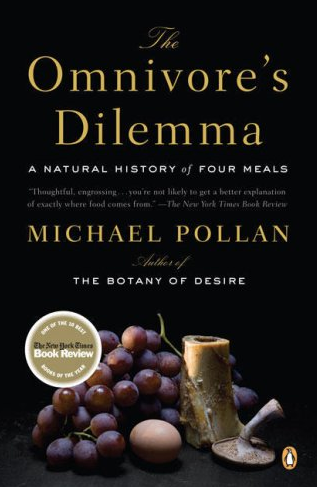
The Omnivore’s Dilemma. Michael Pollan.

  • “The whole of nature,” wrote the English author William Ralph Inge, “is a conjugation of the verb to eat, in the active and passive.”

Another food/diet book read this year, but this one is different.  It doesn’t really espouse a typically type of diet as Plank’s “Real Food” (go back 100 years and eat that way) or Sisson’s “The Primal Blueprint” and Wolf’s “The Paleo Solution” (go back 10,000 years and eat that way).

What it does is look at the 3 ways we can get food to our table:

  1. Industrial (the typical way most food is grown today — from the corn fields and cattle fields to the table)
  2. Organic (and he shows the difference between industrial organic vs. small farm organic)
  3. Hunter-gatherer (just what it says!)

In each scenario, he follows the food chain from the beginning all the way to his table, where he prepares and eats a meal.  Well, in the first (Industrial), he buys McDonald’s at the end!

This is really a fascinating book on many levels, and it shows how dependent we have become on corn (which is in something absurd like over 50% of all processed foods you buy at the grocery store) and is used in feeding the animals we eat, etc.  He goes into the economics of why this is the case – namely government subsidization of the corn farmers.  The organic section was also fantastic, especially the part that explores how Polyface Farm in VA is doing things — and how they are successful at it.

The problem with hunter-gatherer is that we can’t support the 6.5+ billion people in the world doing that.  A hunter-gathering tribe could only support themselves, only in the right locations, and only if they were not up against other people-groups.  Small scale organic like Polyface seems to work — so going organic and local is a good thing.  There is a question of scale — could it grow to support the world’s population?  That is tough to say.  And what about costs?  It is more expensive than the industrial chain in initial costs.  But what about the long terms costs in terms of the environment, the dependency on petroleum the industrial food chain has, and health care?  Is small scale organic healthier than industrial?  (I would say “of course!,” though some people don’t agree… Namely the large corporations behind industrial and the scientists on their payroll, and the government groups on the receiving end of their lobbying!)

I would highly recommend this book to everyone!  It is long, but well worth it.  If you want the movie version, Food Inc., is reasonably close, though not nearly as thorough.   And it is not an exact copy, or even a facsimile, of the book.  It does tell some of the same story, and Pollan was one of the main consultants.

The Paleo Solution. Robb Wolf.

Another food/diet book.  I had no idea when this year started I would read so many books on running and food/diet!  Oh well, it has been interesting and fun following the trail where it leads me.

Anyway, after reading The Primal Blueprint, I thought I’d read this book which just came out a month or two ago.   Based on some of the reviews, it sounded like it would have more science behind the recommendations, and I can affirm that is the case, albeit just a little more.  Overall it is very similar to Sisson’s Primal Blueprint, but there are a few differences.  PS does not get into fitness as much, though PB gets into it in much more detail in the supplemental and free PDF Primal Blueprint Fitness.

I am still not sure I agree with everything in either book with respect to diet, though I do agree with the majority of it.  Namely cut sugar, cut processed foods, and the like.  Both also promote grain/legume/dairy free as well, though PB seems to have a little more latitude towards dairy — especially fermented dairy and/or dairy from grass fed cattle.  PS says ok to butter from grass fed, but seems to not like cheeses and yogurt like PB allows.  I am still not sold on legumes being all that bad for you, and I like my cheese and yogurt, as well as milk occasionally.  None of that seems to bother me.   I am beginning to agree with grains to some extent, though I don’t know that everyone needs to cut out all grains.  I do agree that the current recommendations on building your food intake around grains is bad advice — the level of grains that are recommended seem far to high and many recent studies are pointing to the increased in grains (not just processed) ad the culprit behind the obesity and cardiovascular disease epidemic.  (I don’t want to be too reductionist and say that is our only problem… Things are much more complex than that!)   But some grains, some times, may not be too bad, unless you have a known disease/intolerance/or allergy, especially for athletes that can use more carbs…  Of all the grains, I would say wheat is probably the worst for the majority of people, due to how the body views gluten, and what that does internally.

I suppose I’ll have to read the Paleo Diet for Athletes next to see what they say!

I still don’t understand why PS states that combining fat/protein/carbs does not affect the body’s insulin response.  I.e. they state that carbs, no matter if they are eaten alone or in combinations with other (low glycemic load) foods, does not change your body’s insulin response.  I actually have a question submitted to Robb so maybe he’ll answer it on the pod cast, but if anyone understands this and has reference to the literature on it, I’d appreciate it.

Unless you are super interested in this stuff, I’d say you could just pick either PS or PB and be fine — no need to read both.  PS does have more science background, while PB lays out just what the title says — a blueprint for living, not just for diet, but for exercise, work, sleep, and play.  (PS definitely touches on sleep as well as stress as it relates to work and play.)

If you want to turn back the clock 100 years instead of 10,000, I’d highly recommend Nina Plank’s Real Food.  And the Ominvore’s Dilemma is just fascinating all around!   (I just realized I haven’t written anything on the latter yet, even though I finished it before PS, so I’ll have to do that soon!)

MR 340 Part II, The Race

It is a bit difficult to write a race port on this race in my typical adventure race format.  In AR’s, I am normally able to keep all of the details and happenings straight in my head — I think due to the transitions from one event to another.  I’m also typically more involved in planning and navigation than I was in the MR 340 — in this race I was just a paddling grunt.  (Happily, I might add!  It was nice to not have to do a ton of planning as is typical.)

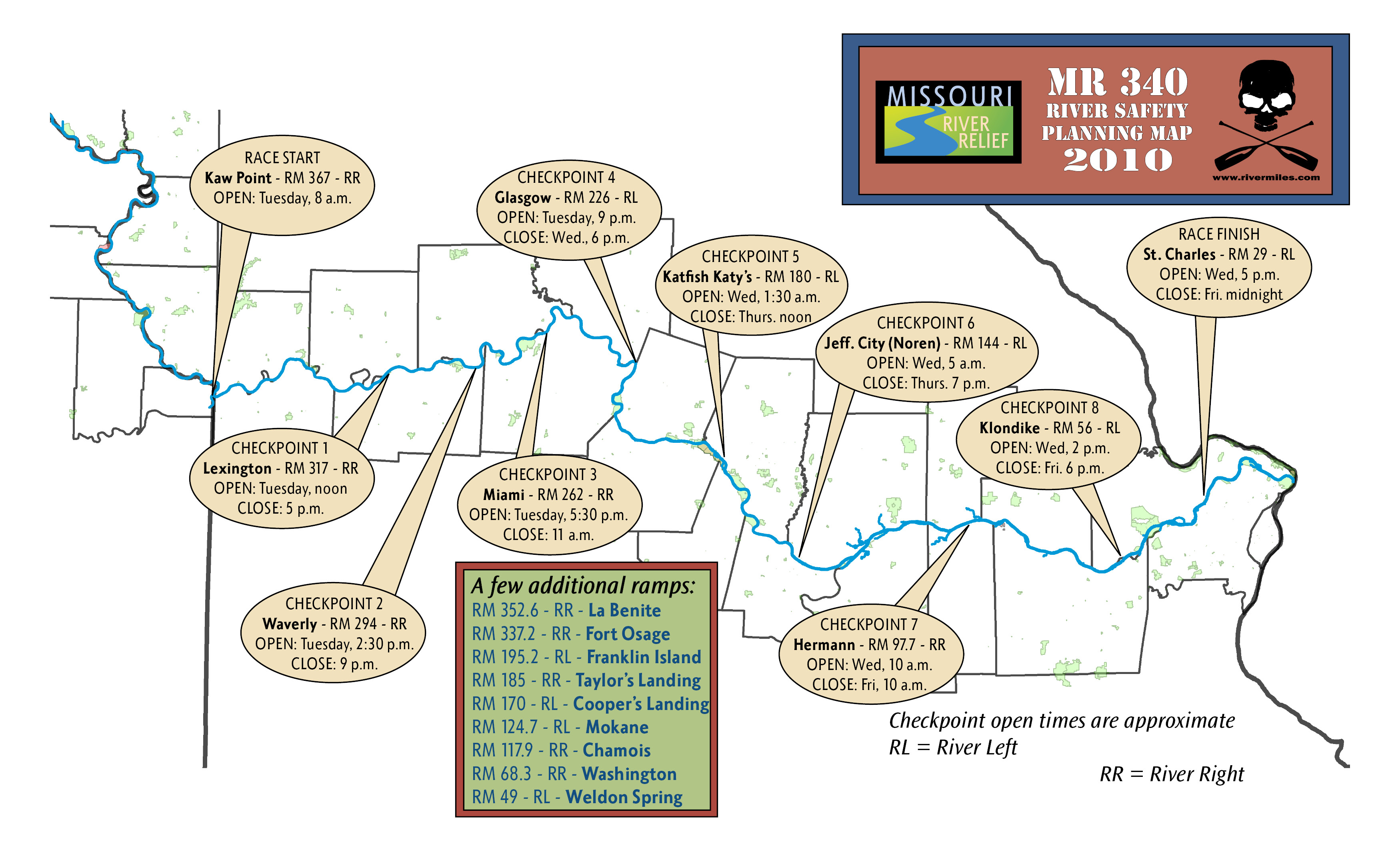
So, to put it another way, since I’m normally reading maps and the passport, heavily involved in the navigation during the race, and because there are clear transitions, it is much easier to keep things straight in a normal AR than in this race.  In the MR340, while we stopped 7 times, I didn’t even get out of the boat a couple of times, and the ramps all kind of blend together in my mind.   So in this post, I’ll give a breakdown of times per checkpoint as kept by our ground crew, perhaps include a quick point or two, and throw in some photos here and there.

I’ll also include the same photo from the last post (part I) here for reference.


Race Start – Kaw Point

The race started at Kaw Point.  We chose to not go to the far river bank so that we could stay close enough to shore to allow us to enter the boat fairly late (close to the start time).  While the far shore definitely gives you a jump on the other competitors in terms of cutting the corner and getting to the fast water quicker, we felt that an additional 45-60 minutes sitting in the boat and fighting the currents was not worth it — especially when we were looking at a 40 hour or more race.

We all got in the boat a few minutes before 8 a.m., pushed off a bit, and then waited.  It was a bit difficult to hold the boat in the current and not collide with other boats, but overall we did pretty well.  At 8:02 the national anthem started, and at 8:05 the canon was fired and we were off!


It was certainly crowded, and when the Kansas River joins the Missouri River within a minute or two of the start, the high/fast current of the Missouri was playing havoc with some of the boats.  While we made it through fairly clean, we later learned that five boats capsized at this point, including eventual female solo winner and star paddler, Robin Benecassa.

I’d like to say we quickly settled into a groove, but in reality, it took hours and hours for that to happen.  However, with 20 paddlers, even though we were pushing nearly 5000 pounds through the water, we had enough power to get into a good groove and start picking off some of the boats that had gotten a jump on us.


Kaw Point to Lexington

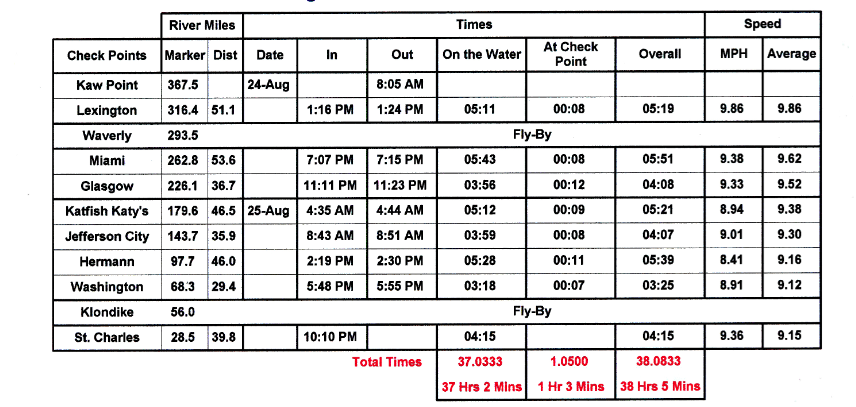
The 1st checkpoint was Lexington, 51.1 miles from Kaw Point.  See the chart below for all the times in, times out, etc.

I recall from this section a few things:

Santo:  Santo Albright, the eventual men’s solo winner, drafted us almost the whole way on this section.  Every time I looked back, he was within a foot or two of our stern.  At times, there were several other boats drafting behind him.  This was a solid strategy for him — even though we were losing a little time to the front runners, including a couple of solo men in his division, he was biding his time and taking it easy.  340 miles is a long ways, and he would be fresh on the 2nd day.

Brad:  I noticed a solo man in front of us that was having trouble staying straight.  He was fighting the water the entire way, it seemed.  I couldn’t understand how he could be in front of us — I guess whenever he could keep it straight, he was flying!  We eventually pulled up beside him, and he asked us if his rudder was working.  As best we could see, it was.  A few minutes later I looked back and saw him pulling over, I suppose to check the rudder.  We never saw him, but later learned that he had dropped from the race.  The headline that was picked up nationally, and eventually, internationally read “Asian Carp Knocks Paddler” from race.  The actual story pointed more to the rudder as the main problem, but speculation around the post race area was on boat choice.

Lexington to Wavery to Miami to Glasgow … to St. Charles

Now it all starts to get a little fuzzy.  :-/

I can say going in to the 1st check point at Lexington, I thought our time off the water (at the check points) would be pretty high, as much as 20-25 minutes per stop.  Going in to our 1st CP, I said a stretch goal would be 12 minutes, but we made it out in 8!  Overall, we had amazing checkpoint times considering our crew had to refuel 20 people every time, and in many cases we could not get the boat in broadside — so everything had to come in from the bow.  Or people just jumped.

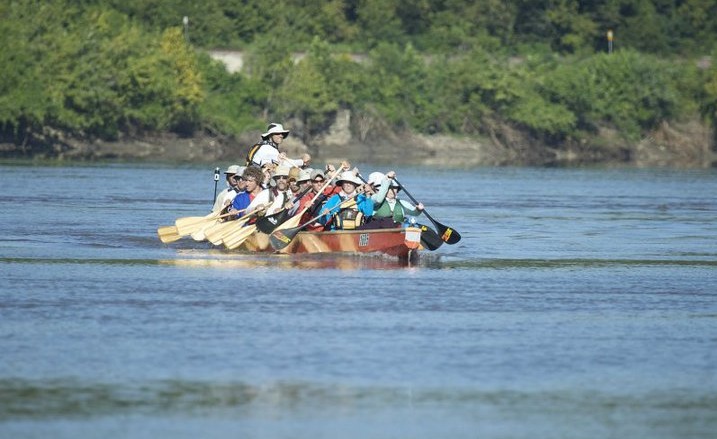
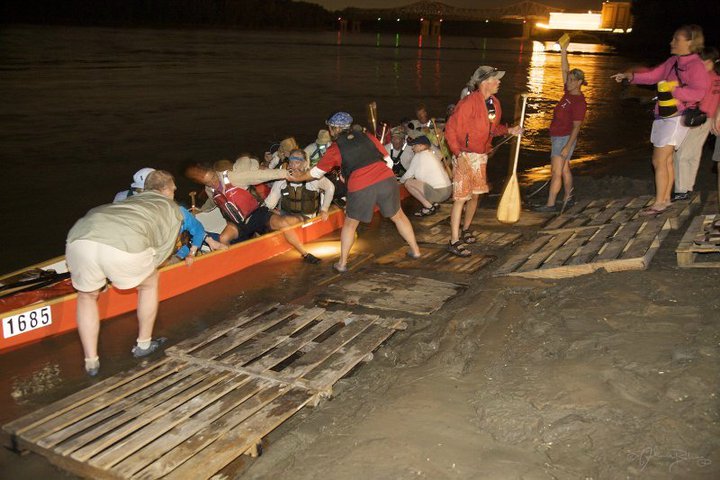
This is what we looked like coming in to a typical CP:

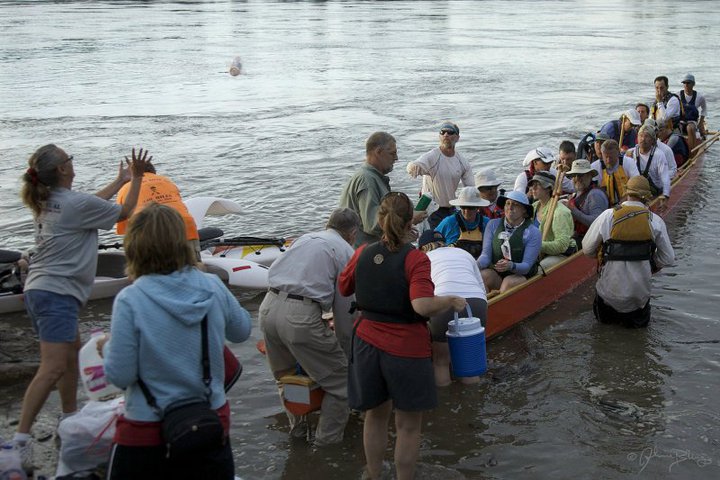
And this next photo shows a little of the controlled chaos of a CP — note the bottle being thrown in the air.  This is actually early in a CP before it got really chaotic.  At only one check point did everyone get out — typically a quarter to as much as half of us would stay in.  Others would jump out to use the restroom, or help with gear, or to just to stretch their legs.  Yet our longest CP was only 12 minutes.  Most of the credit has to go to the crew for this amazing feat.


And here we are just about to leave:

Here is a chart of all the CP’s and other relevant data, showing our average mph, time in the CP, etc.

Finish
We pushed hard the last 40 miles from Klondike in — well, really we pushed hard the last 100 miles or more.  Once we had crept into 3rd place, we did not want to give that up!  And even before then, I recall Will saying a few times “We only need to pass two more boats to secure our place on the podium,” so we pushed hard for a long long ways.

We tried really hard to break 38 hours when we realized how close we were, but we came up just short at 38:05.  I have to say the last couple miles was an amazing, exhilarating time.  We really came together, paddling hard an in sync, and the energy level was unreal.  I think the whole boat was yelling and screaming, and chanting out various words such as “hit,” “stroke,” “arrrgh” an the like, to keep us all in sync.  I certainly hope someone has a video of us coming in under the last bridge.  They said they could hear us long before they could see us.

We had a bit of an anti-climatic finish, as we misjudged the current in the eddie, so we got pushed back up river about 20 feet instead of hitting the shore right at the finish.  But it was only a few strong paddles to put us right where we needed to be.

Considering our original optimal time goal was 40:00 hours, and I thought we could be as much as 48 hours, we really rocked it!  It was good enough to win our division (well, we were the only Dragon Boat!), and get 3rd overall, behind two incredibly fast and talented tandem boats.  We were all certainly pleased, and I think we proved to the entire paddling community that not only is it possible to finish a race like this in a dragon boat, but that in future years, a dragon boat just may win it.  With a few tweaks here and there, I’m certain that is the case.  And, while we were at it, we just happened to shatter the previous world record for distance covered by a dragon boat!

Here is a photo of me getting out at the end — falling back into the boat.  I knew my legs were going to be rubber — in fact, when Joey and I had been switching seats the past few hours, I only did it while sitting and him standing.  I had tried once on the last leg to stand, and the legs just weren’t there.  It wasn’t that I was that exhausted or anything, I just didn’t have land legs.  So I had grabbed my paddle to brace myself as I came out, but it still wasn’t quite enough!

Again, much of the race is a blur, and I don’t recall everything that happened in the order it happened, so in my next post, I’ll offer a few anecdotes and post some other photos…

(to be continued)